Summary

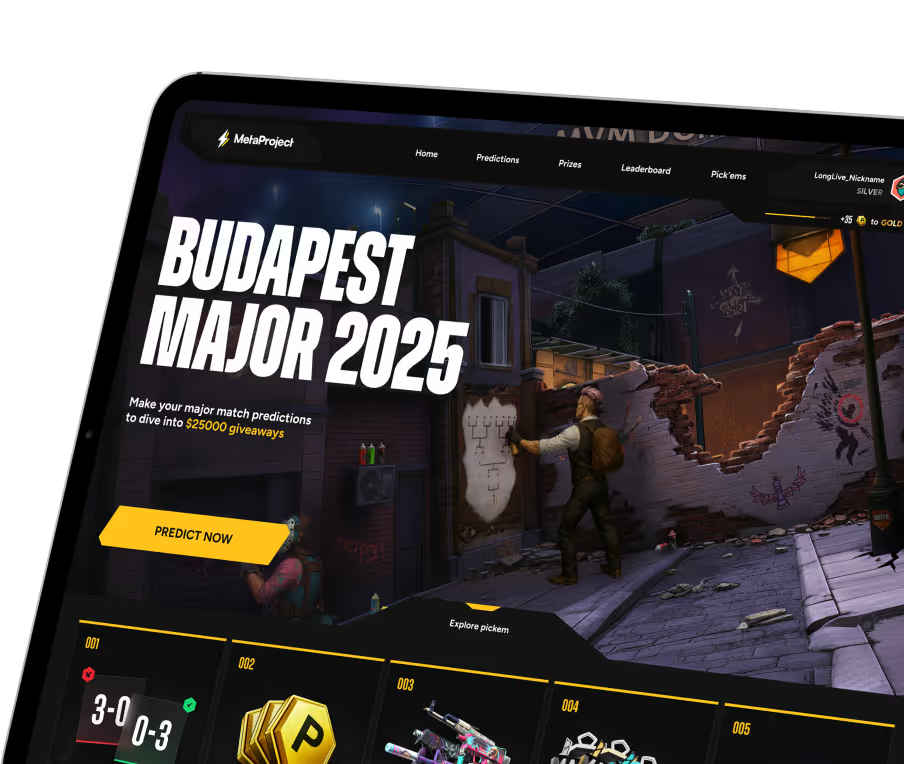
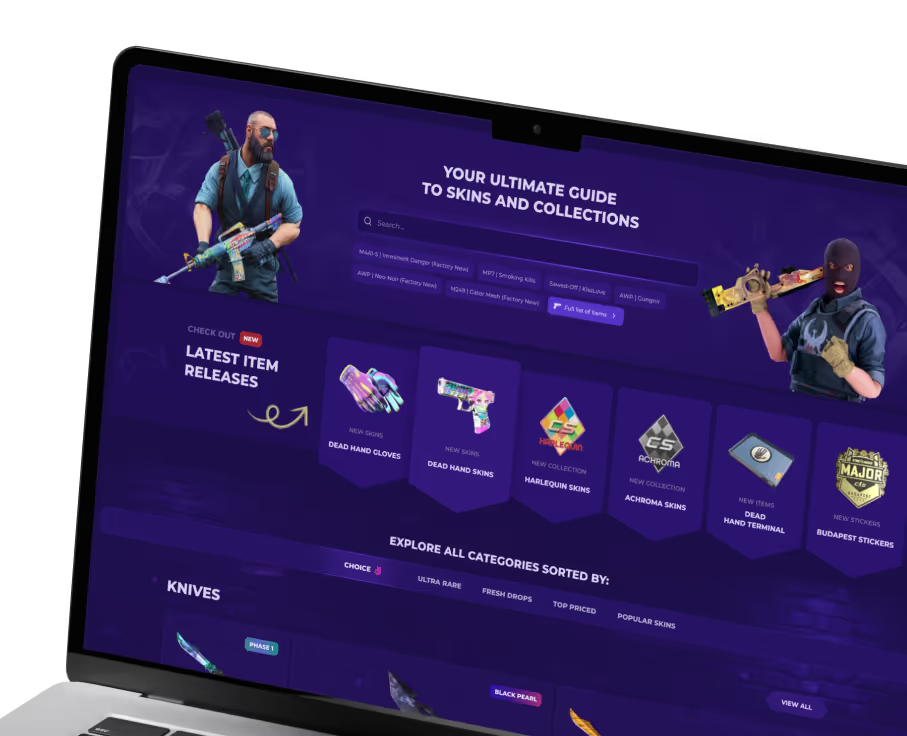
The digital collectible market is a high-velocity environment where user attention is the ultimate currency. A leading digital asset trading platform faced a critical ceiling: desktop dependency. While their web platform was high-performing, user engagement plateaued during "away-from-desk" hours, leading to significant profit leakage.

Request

The objective was to design and deploy a mobile ecosystem for iOS and Android that could achieve:
150,000 – 200,000 installations within the first year.
A minimum 10% increase in LTV among active payers.
Hyper-personalized marketing through granular data collection on user asset preferences.
Frictionless KYC adoption by integrating verification into the mobile reward loop.

Feature scope

The project was organized into three core technical epics, each addressing a critical stage of the user journey from initial engagement to long-term retention.

Epic 1: The Habit Loop (Engagement)

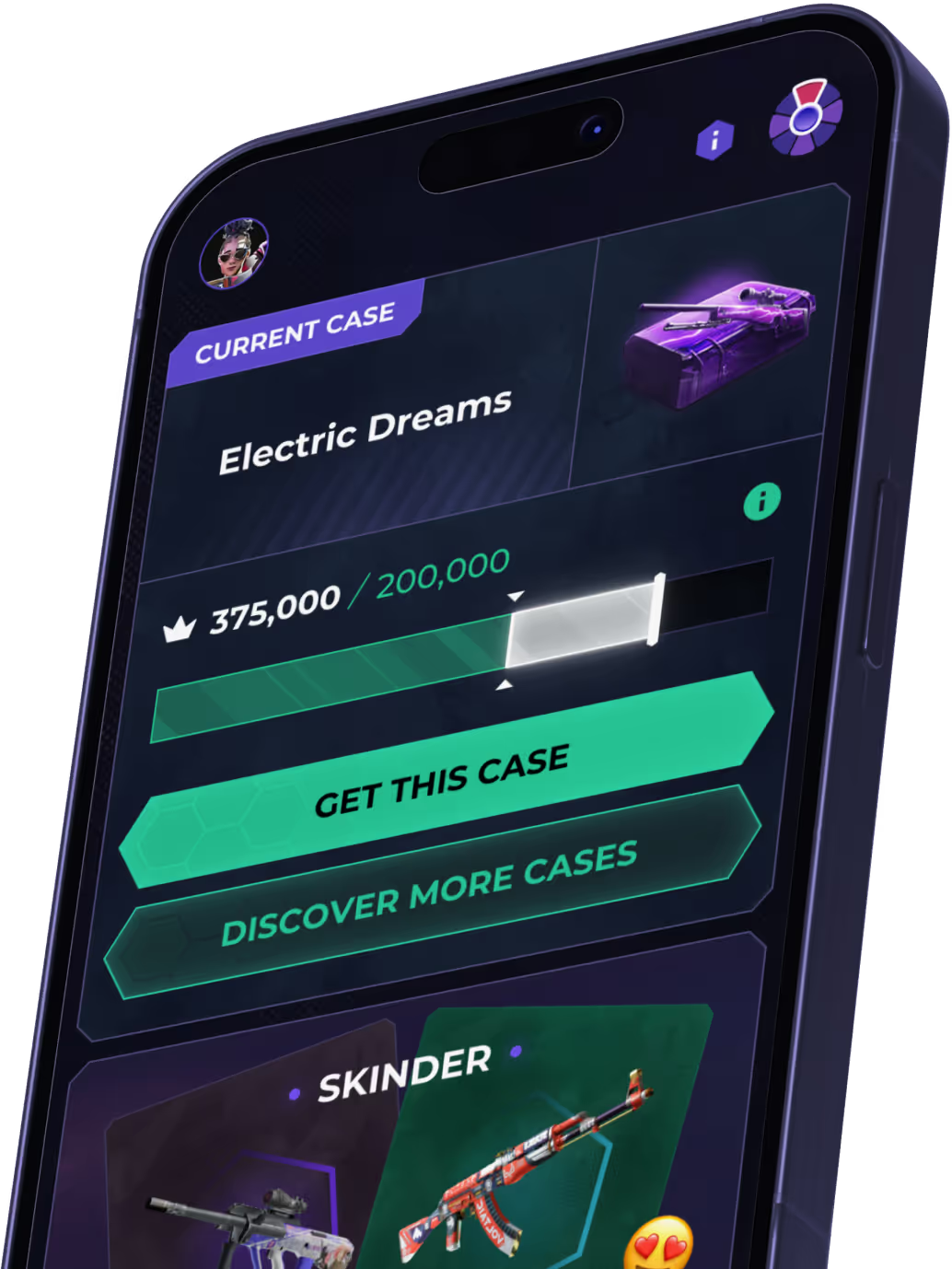
This epic involved the implementation of "Grind" mechanics and session-based mini-games designed to maximize Daily Active Usage (DAU).

The goal was to replicate the thrill of the primary platform’s case-opening mechanics without requiring direct financial transactions. Key deliverables included:

Daily Check-in Systems:

Incentivizing users to open the app every 24 hours to collect soft currency.

Multiplier Mini-Games:

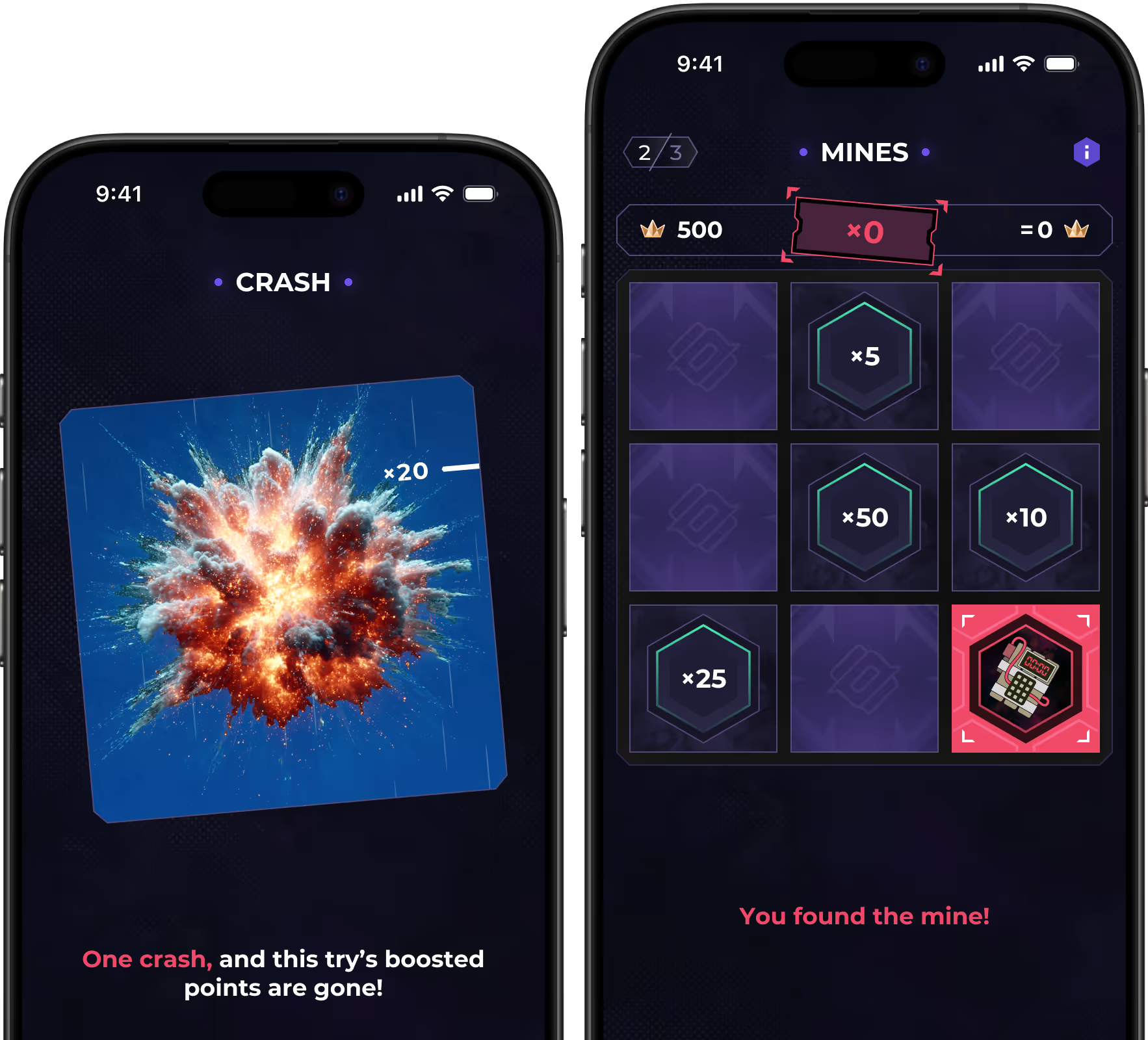
Development of Crash, Mines, and Upgrade modules where users can multiply their points.

Synchronized Mobile Inventories:

Real-time tracking of earned items and bonuses that can be tracked and claimed via a mobile dashboard.

Epic 2: Preference Intelligence (Data Mining)

This epic focused on the development of the "Skin Tinder" interface, a high-frequency behavioral data gathering tool.

This interface allows users to swipe through various digital assets, indicating their preference for specific weapon types, rarities, or aesthetic themes. The technical scope included:

Real-time Data Streaming:

Feeding swiping behavior directly into Amplitude for granular intent mapping.

Personalization Algorithms:

Identifying user segments based on preference data to trigger hyper-personalized "deals" via the web platform’s CRM.

Epic 3: Tiered Retention Funnel (Monetization)

The final epic addressed the transition of users from the mobile engagement environment back to the revenue-generating web platform. This required a high-reliability notification system and a gamified approach to account linking. Key features included:

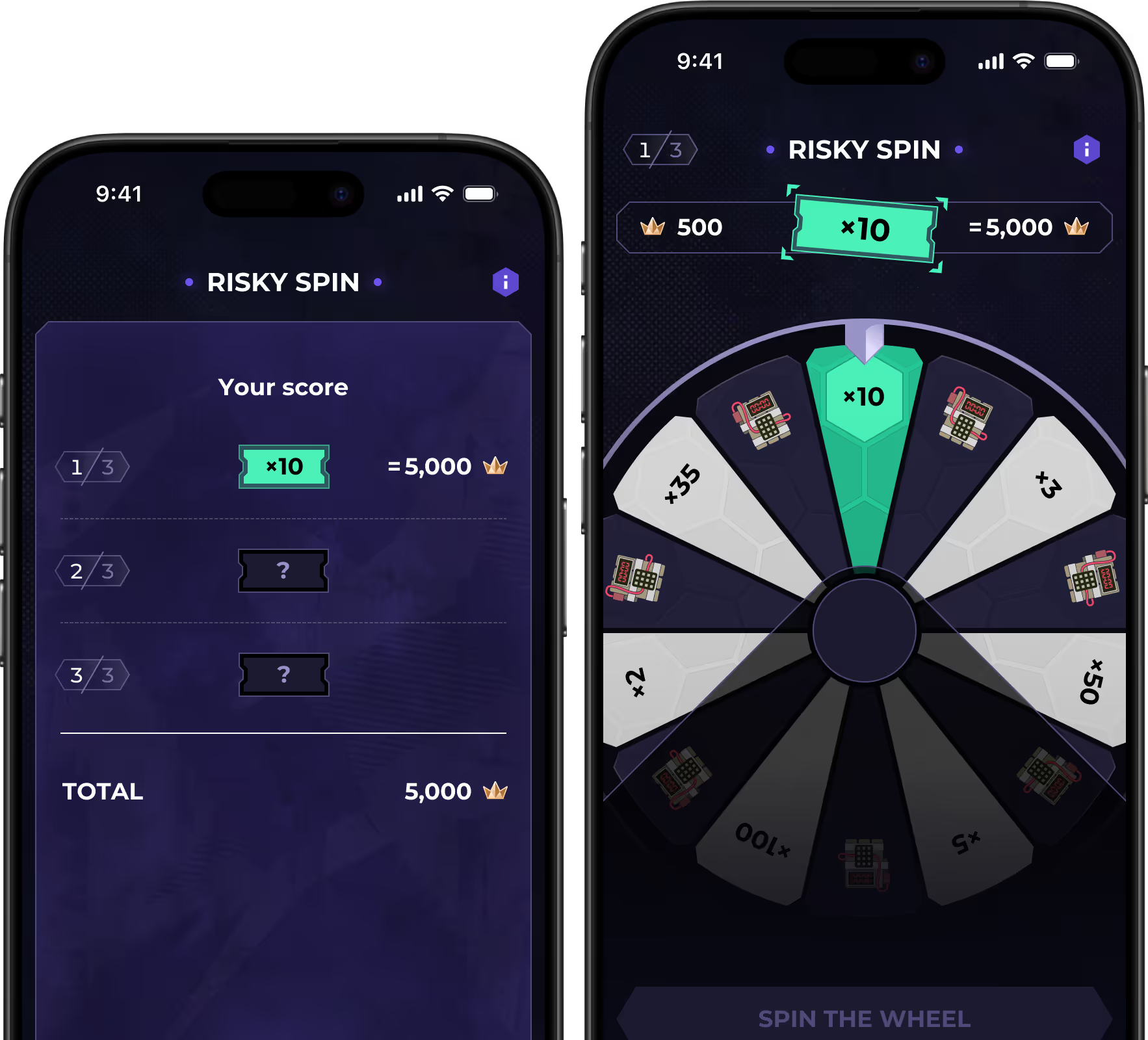
Tiered Fortune Wheels:

Incentivizing users to open the app every 24 hours to collect soft currency.

Automated Notification Triggers:

Utilizing OneSignal and CustomerIO to send push notifications when rewards are available or when a user has a time-sensitive "Upgrade Window" on the web platform.

Multiplier Mini-Games:

Crash, Mines, and Upgrade modules where users can multiply their points
Two smartphones showing game screens; left displays an explosion with text 'CRASH' and message about lost points, right shows a Mines game board with revealed mine and several multipliers.

Tech stack

We architected a resilient, cost-optimized stack tailored for rapid MVP iteration and high-scale performance:
Backend & Orchestration:
Node.js, BullMQ, Redis (Replacing Kafka for lean efficiency)  1

DevOps & Infrastructure:
GitLab, GitOps (app.yaml), AWS Secrets Manager, Twingate  2
Mobile CI/CD:
Bitrise (iOS & Android build automation)  1
Observability & QA:
Grafana, Sentry, LogRocket, Firebase Crashlytics  2
CRM & Analytics:
Amplitude (Behavioral tracking), OneSignal, CustomerIO  3

Key Features

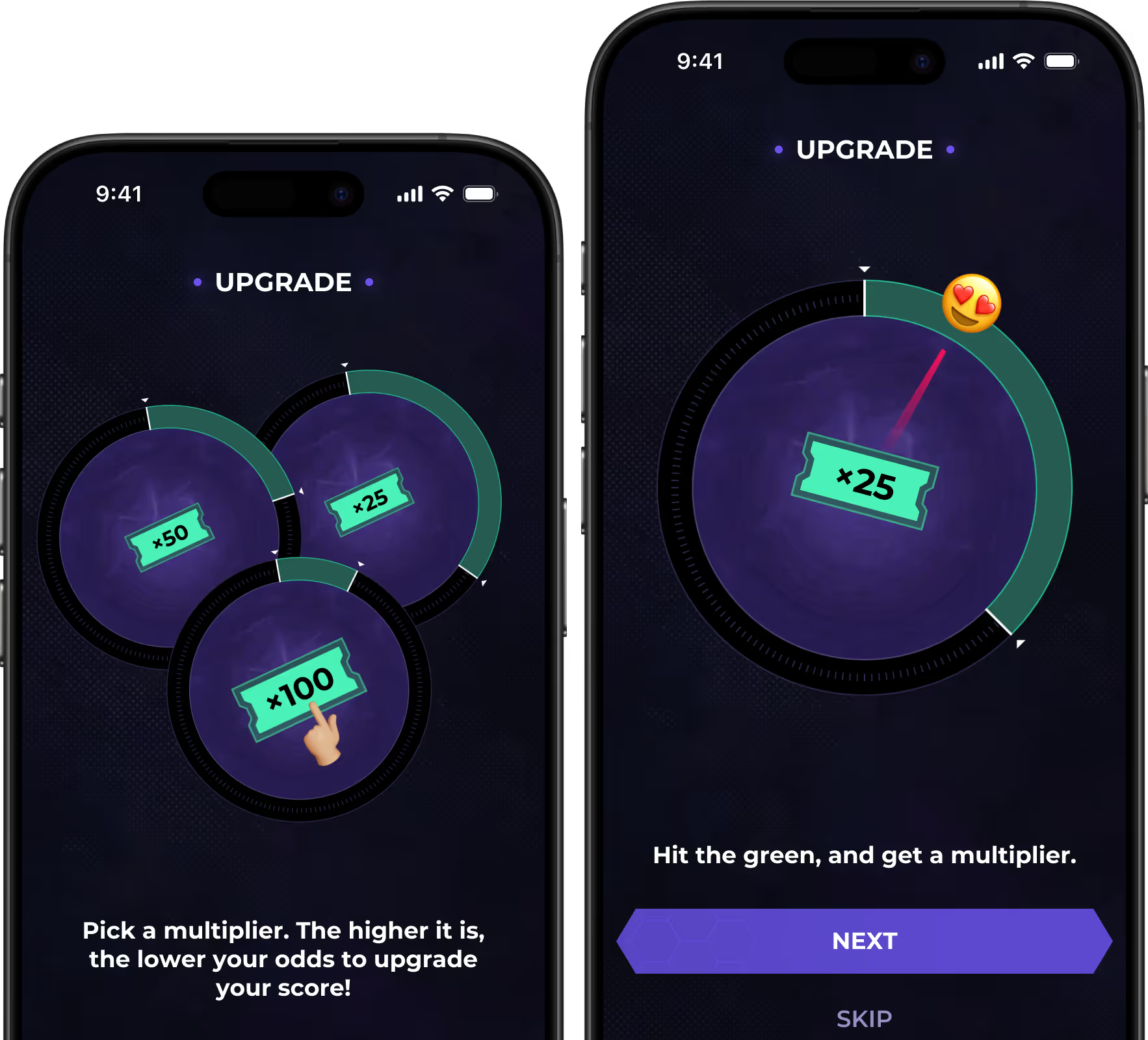
Boost games: UPgrade

To maintain Daily Active Usage (DAU) without direct gambling, we engineered a suite of "Boost" games: Crash, Mines, and Upgrade.
Users earn soft currency through daily check-ins and use these games to multiply their points. This replicates the thrill of the primary platform in a non-monetary environment, building the dopamine loops necessary for high retention.
Two smartphones displaying a game upgrade screen with circular multipliers of 25, 50, and 100, instructions at the bottom guide picking a higher multiplier with lower odds or hitting green to get a multiplier.
The Preference Engine (Skin Tinder)
To drive the 10% LTV goal, the app features a high-frequency swipe interface where users choose between digital assets. This is not just a game; it is a data collection tool that maps user intent. This data is fed directly into Amplitude, allowing the primary platform to offer hyper-personalized "deals" that users are statistically more likely to accept.

Tiered Fortune Wheels

A dual-tier reward system where the Standard Wheel provides consistent engagement, while the Premium Wheel—containing high-value bonuses—is unlocked only after the user synchronizes and verifies their primary account.
Two mobile screens showing a risky spin game with a wheel featuring multipliers and bomb icons, displaying a score of 5,000 points with a 10x multiplier.

Timeline

The project followed a strategic development cycle from May 2025 to the February 2026 launch
Discovery & Scoping
May 2025
Initial organizational review, stakeholder interviews, and definition of the "Skin Tinder" behavior tracking requirements.
Architecture & Design
June – July 2025
Transitioning architectural planning from Kafka to Redis/BullMQ; finalization of UI/UX wireframes for the multiplier mini-games.
Core Development
August – December 2025
Engineering the Node.js backend, mobile frontends, and the anti-fraud layer; full integration of Amplitude and CRM triggers.
QA & Testing
January 2026
Comprehensive functional testing, security audits, and cross-device verification to ensure performance parity across Android and iOS.
MVP Deployment
February 2026
Global launch on App Store and Google Play; initiation of influencer-led acquisition campaigns.

Results

Summary

We didn't just build an app; we engineered a Cross-Platform Habit Engine. By successfully navigating marketplace restrictions and pivoting to a high-performance Redis/BullMQ architecture, we provided the client with a portable CRM that continuously identifies user preferences while driving measurable deposit growth on the primary platform.

Results in Numbers (Targets)

+10%↑
LTV Growth
Achieved by linking mobile rewards to a 24-hour "Upgrade Window" that forces rapid deposit decisions on the web platform.
200,000
Installs
Target for Year 1, supported by a tiered notification strategy with a 99% delivery success rate via OneSignal.
0
Kafka Latency
By pivoting to BullMQ and Redis, we reduced infrastructure overhead by an estimated 30% while maintaining real-time task synchronization.

F. A. Q.

What is included in the development scope?

Lorem ipsum dolor sit amet, consectetur adipiscing elit. Suspendisse varius enim in eros elementum tristique. Duis cursus, mi quis viverra ornare, eros dolor interdum nulla, ut commodo diam libero vitae erat. Aenean faucibus nibh et justo cursus id rutrum lorem imperdiet. Nunc ut sem vitae risus tristique posuere.

How do you estimate timelines?

Timelines are based on the approved scope, project complexity, dependencies, and the client’s feedback speed. Estimates assume timely input and approvals from the client side.Delays in feedback, changing priorities, or new requirements may directly impact delivery dates and are handled transparently.

How many revisions are included?

Lorem ipsum dolor sit amet, consectetur adipiscing elit. Suspendisse varius enim in eros elementum tristique. Duis cursus, mi quis viverra ornare, eros dolor interdum nulla, ut commodo diam libero vitae erat. Aenean faucibus nibh et justo cursus id rutrum lorem imperdiet. Nunc ut sem vitae risus tristique posuere.

Who is responsible for communication and approvals?

Lorem ipsum dolor sit amet, consectetur adipiscing elit. Suspendisse varius enim in eros elementum tristique. Duis cursus, mi quis viverra ornare, eros dolor interdum nulla, ut commodo diam libero vitae erat. Aenean faucibus nibh et justo cursus id rutrum lorem imperdiet. Nunc ut sem vitae risus tristique posuere.

What happens after delivery?

Lorem ipsum dolor sit amet, consectetur adipiscing elit. Suspendisse varius enim in eros elementum tristique. Duis cursus, mi quis viverra ornare, eros dolor interdum nulla, ut commodo diam libero vitae erat. Aenean faucibus nibh et justo cursus id rutrum lorem imperdiet. Nunc ut sem vitae risus tristique posuere.

F. A. Q.

How do you launch a digital asset app on the App Store or Google Play without violating their policies?

The key is decoupling direct monetary transactions from the mobile experience. In 2026, the most successful strategy involves a "Companion App" architecture. By using a soft-currency reward system and gamified "grind" mechanics, you provide value and engagement on mobile while directing high-intent financial actions (like deposits or complex trading) to your compliant web platform.

How does mobile gamification directly impact user Lifetime Value (LTV)?

Gamification increases LTV by creating a "re-engagement loop." Features like daily reward wheels or progress-based "grinds" give users a reason to open the app every day. By syncing these mobile achievements with web-platform bonuses, you create a psychological "Upgrade Window," which our data shows can increase the LTV of active payers by over 10%.

How do you protect a reward-based mobile app from automated botting and farming?

Security is a primary concern for any platform offering digital rewards. We implement a multi-layered defense strategy: behavioral signature monitoring to identify non-human patterns, hardware-level device attestation, and "Proof of Activity" requirements. This ensures that your marketing budget is spent on genuine users, not automated scripts.

How do you choose between Native, Cross-Platform, or Progressive Web Apps (PWA)?

The choice depends on your performance needs and budget. Native (Swift/Kotlin) offers the best performance but higher costs. Cross-platform (Flutter/React Native) is often the "sweet spot," providing near-native performance with a single codebase. PWAs are cost-effective but lack the deep hardware integration and push-notification reliability required for "habit-forming" apps. For this specific case, a cross-platform approach ensured rapid deployment without sacrificing the smooth UI needed for mini-games.

What are the key factors in choosing a mobile tech stack for a high-load project?

Focus on concurrency and real-time synchronization. For the backend, Node.js combined with Redis and BullMQ allows for efficient handling of thousands of simultaneous tasks (like reward distributions or game states) with minimal latency. On the infrastructure side, a robust CI/CD pipeline like Bitrise is essential for automated testing and ensuring that frequent updates don't break the user experience.


+1
🇺🇸
Uploading...
fileuploaded.jpg
Upload failed. Max size for files is 10 MB.
By clicking this button I agree to the Privacy policy
Thanks for reaching out!
We’ve received your message and one of our experts will be in touch shortly.
Back
Oops! Something went wrong while submitting the form.

Start your capability journey

In 4 weeks we map your architecture, delivery model, knowledge gaps, risks, and capability priorities — so you can scale independently.
Man with short dark hair and beard wearing sunglasses and a light-colored shirt, looking to the side against a blurred outdoor background.
Alexey Belokamensky
CEO
Black and white photo of a man in a suit speaking at a microphone on stage with a piano in the background.
Alex Volt
Head of Sales
Black and white portrait of a woman with curly hair wearing a white top, looking off to the side.
Sofia Petrenko
Recruitment Manager