Growing the fleet without growing the back office
Speed Logistics Marine's admin work grew with every vessel it added. We rebuilt its operations on one platform, and we have run and evolved it for more than five years.

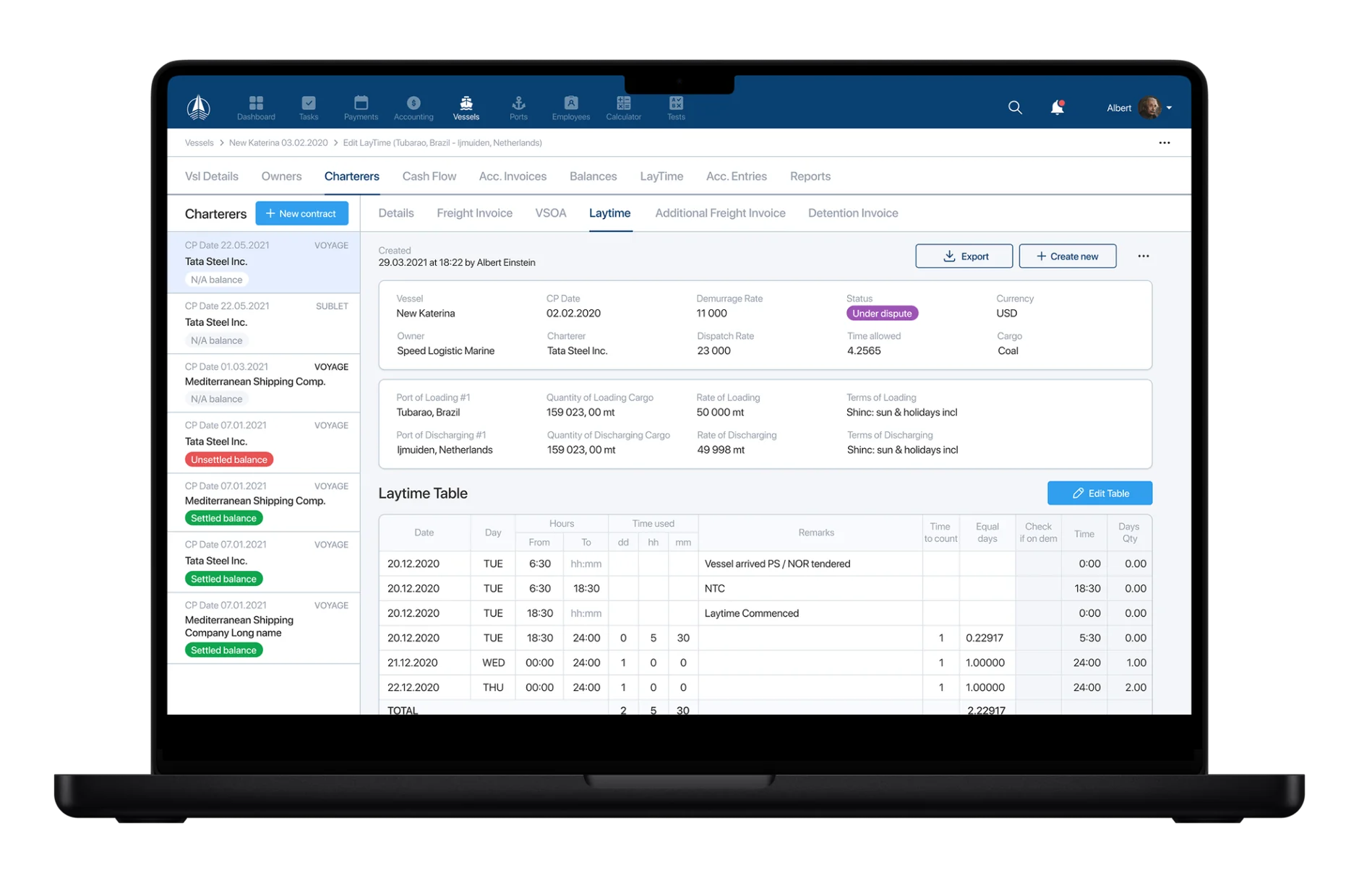
The limit on growth was paperwork, not ships
Shipping moves roughly 80% of global trade, yet much of its admin still runs on tools built for a smaller, slower era. SLM reached a point where every new vessel added a fixed amount of paperwork: contracts to track, invoices in several currencies, hundreds of emails to route.
Hiring could not keep up. Vessel tracking, multi-currency accounting and correspondence lived in separate tools, so a simple question like “what does this voyage really cost us?” meant reconciling three systems by hand.
The brief: let the business add vessels without adding back-office headcount at the same rate. And do it with live operations, because shipping doesn't pause for a cutover weekend.
Decisions waited on the inbox
Thousands of documents and emails were sorted by hand. In shipping, decisions are bounded by tides, port windows and crew schedules, so a day's delay costs money.
Records became regulatory risk
Lease and ownership history lived in fragments. A missed contract lapse or an unverified owner could put an operating licence at risk in some jurisdictions.
No one saw the full cost
Accounting, HR and fleet ran on separate systems. Real-time accountability was out of reach, and duplicate invoices leaked capital unnoticed.
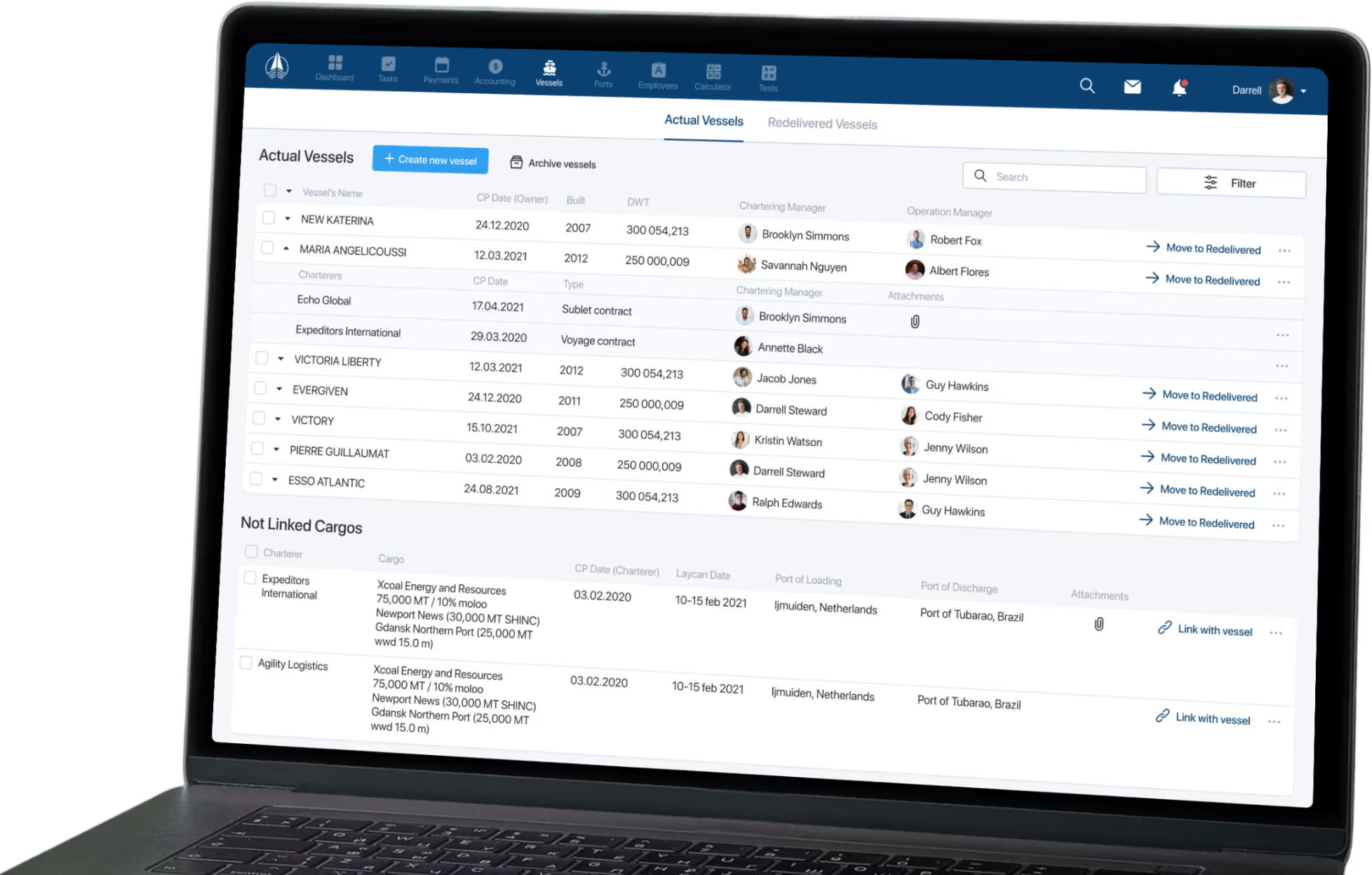
Four decisions that removed work instead of speeding it up
Stop routing mail. Let the system file it.
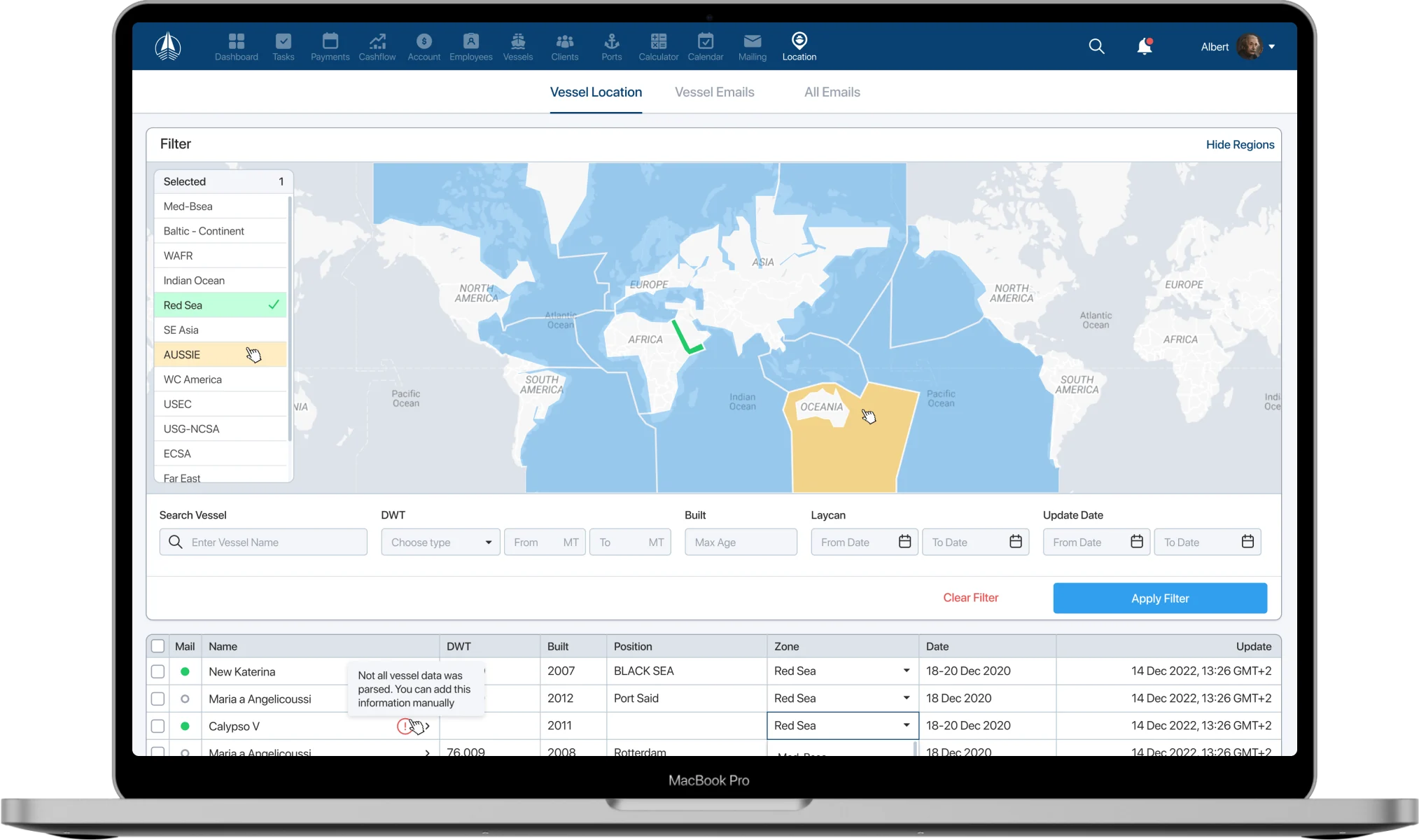
The fastest routing step is the one that doesn't exist. An AI indexing module reads incoming correspondence and attaches each message to the right vessel and contract, so the inbox becomes a view organised around the fleet.
Reconcile every day, not every quarter
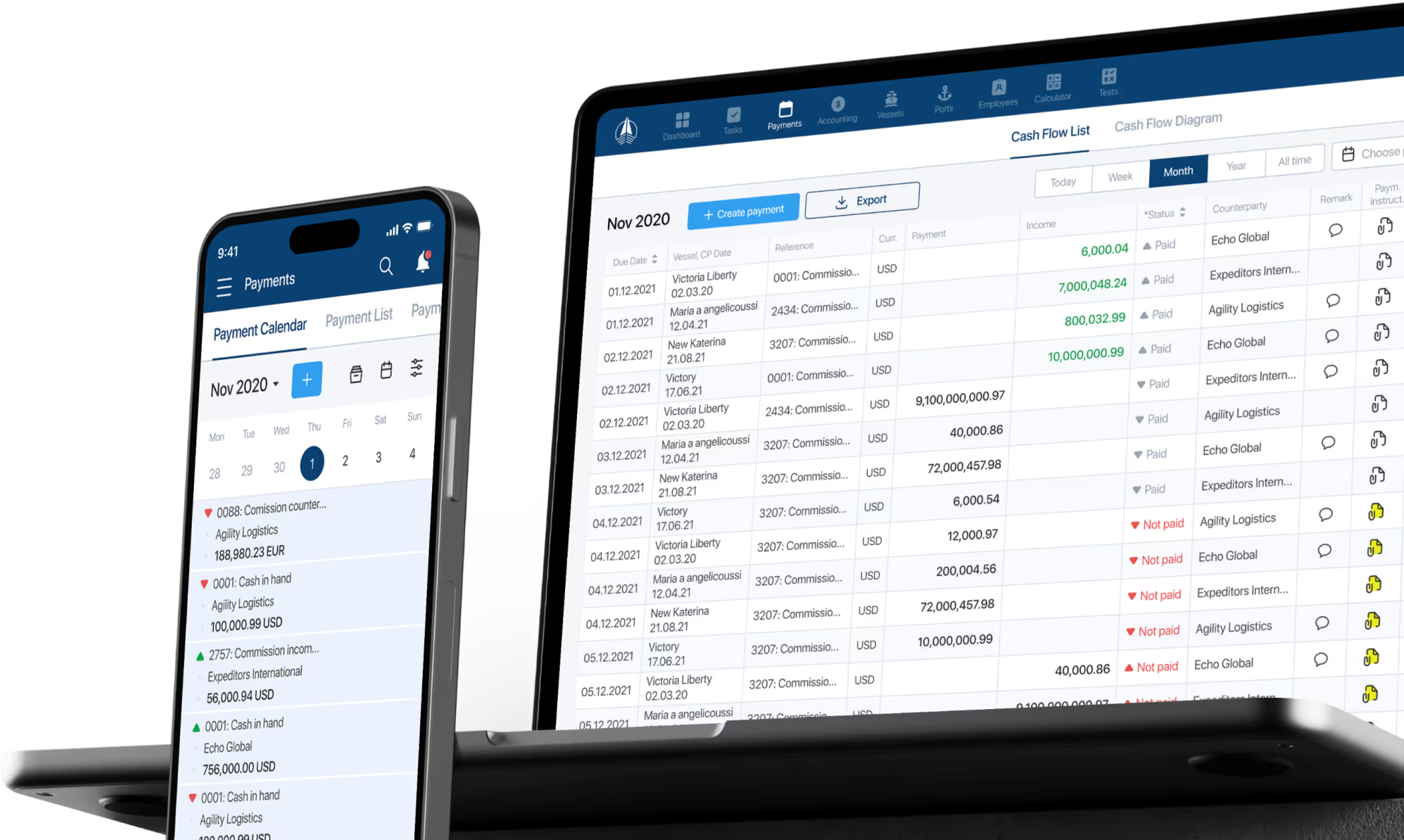
Vendors invoice in one currency, settle in another and report in a third. Reconciliation is built into the financial core, so the numbers are right when they are entered rather than after the quarter closes.
One record per vessel
Lease terms, contracts, payments and ownership documents used to live in five places. Now each vessel has one record, and contract lapses surface early instead of at audit.
Production scale from day one
There was no quiet period to switch systems. The platform ran on a multi-zone AWS setup from its first release, and legacy data moved over in a dedicated two-month phase while ships kept sailing.
2019 · Build and launch
Vessel hub, financial engine, legacy data merged.
2019–2024 · Support and new modules
Regulatory changes, audits, predictive routing.
2025–2026 · Re-platforming
A new enterprise stack in 12 months, operations never paused.
Today · Run and evolve
Operations, new modules, roadmap.
SLM's engineering team is us, by design
SLM runs ships, not software, and never planned to build an in-house tech team. So the engagement did not end at go-live. For more than five years MetaProject has operated the platform, kept it at 99.99% uptime and shipped new capability as the business grew, including a predictive routing module added after launch. In 2025–2026 we moved the whole platform to a new enterprise stack without stopping operations.
Next on the roadmap: live vessel sensor data for predictive maintenance, and automated regional compliance documents.
5+ years
running and evolving the platform
99.99%
uptime for global operations
9
business functions on one platform
0
in-house engineers SLM had to hire
90%
of voyage payments and invoicing automated
−50%
month-end close time
30–40%
less admin work per employee
+40%
project velocity
2 hrs
reclaimed daily per team member
99.99%
infrastructure uptime
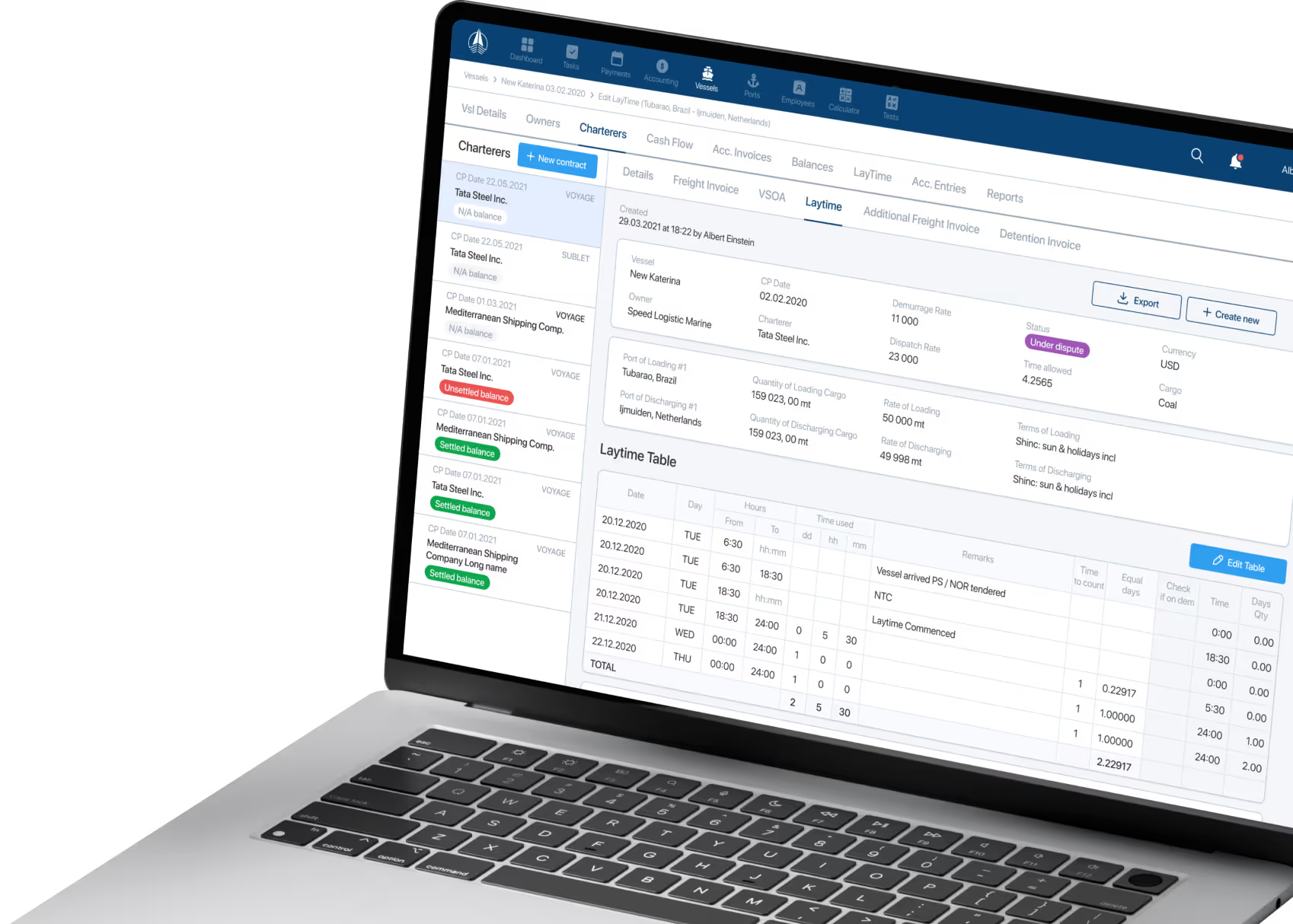
Nine modules on one platform: vessel lifecycle, multi-currency finance, AI mail indexing, HR and crew competency, calendar and files, a mobile app for port-side teams, and predictive routing.
Built in 2019 on Python / Django · Vue 2 · PostgreSQL. Re-platformed in 2025–2026 to .NET 10 · Next.js 16 · PostgreSQL · Redis · Kafka · Kubernetes · GitHub Actions + ArgoCD · AWS Multi-AZ
Questions about this project
What was the most impactful single feature in this engagement?
The AI-powered mail indexing module. Operationally, the financial engine and vessel lifecycle hub generated the larger headline numbers (90% automation, 50% faster close), but in daily work the mail indexing changed the most. It removed the routing step from an inbound correspondence flow that was consuming roughly two hours per person per day. The architectural lesson applied directly here: the automation with the biggest payoff isn't always in the obvious places.
How long does it take to migrate legacy maritime data to a new platform?
In the original build, consolidating vessel lease histories, ownership records and financial data from several legacy tools took about two months. When SLM later moved to a new enterprise stack, five years of production data were validated and normalised with ETL scripts and moved in waves over the build, with a two-way sync during cutover. Cleaner source data lands faster; heavy data-quality remediation takes longer.
Why did SLM move to a new stack after five years?
The platform was built in 2019 on Python, Django and Vue 2. After five years of growth, technical debt and the aging stack started to limit scaling, so in 2025–2026 we moved it to .NET 10, Next.js 16, Kafka and Kubernetes in 12 months without stopping operations. The full story is in our ERP modernization case study.
How does a mobile app for port-side teams change the operational model?
It removes the assumption that operational decisions have to wait for someone to get back to the office. Port-side teams can update vessel status, approve documents, and access the one shared record from the terminal. For an industry where decisions are bounded by tide and port windows, removing the office round-trip is significant.
How does a digital core address the "administrative burnout" pattern in shipping?
By absorbing the routing, reconciliation, and reporting work that previously fell to people. Fragmented records and correspondence silos are replaced with automated task management and asset-linked notifications. The team can manage a larger fleet without proportionally growing administrative headcount. That headcount is what has historically capped maritime growth.
See more cases








Is admin growing faster than your business?
Tell us what you are building. We will come back with an honest view of how we would approach it.