Concretely, that means:
What we do
Platform Engineering Consulting
Make change safe enough to be boring.
Results from our platform work
100K+
concurrent users, with automated horizontal scaling
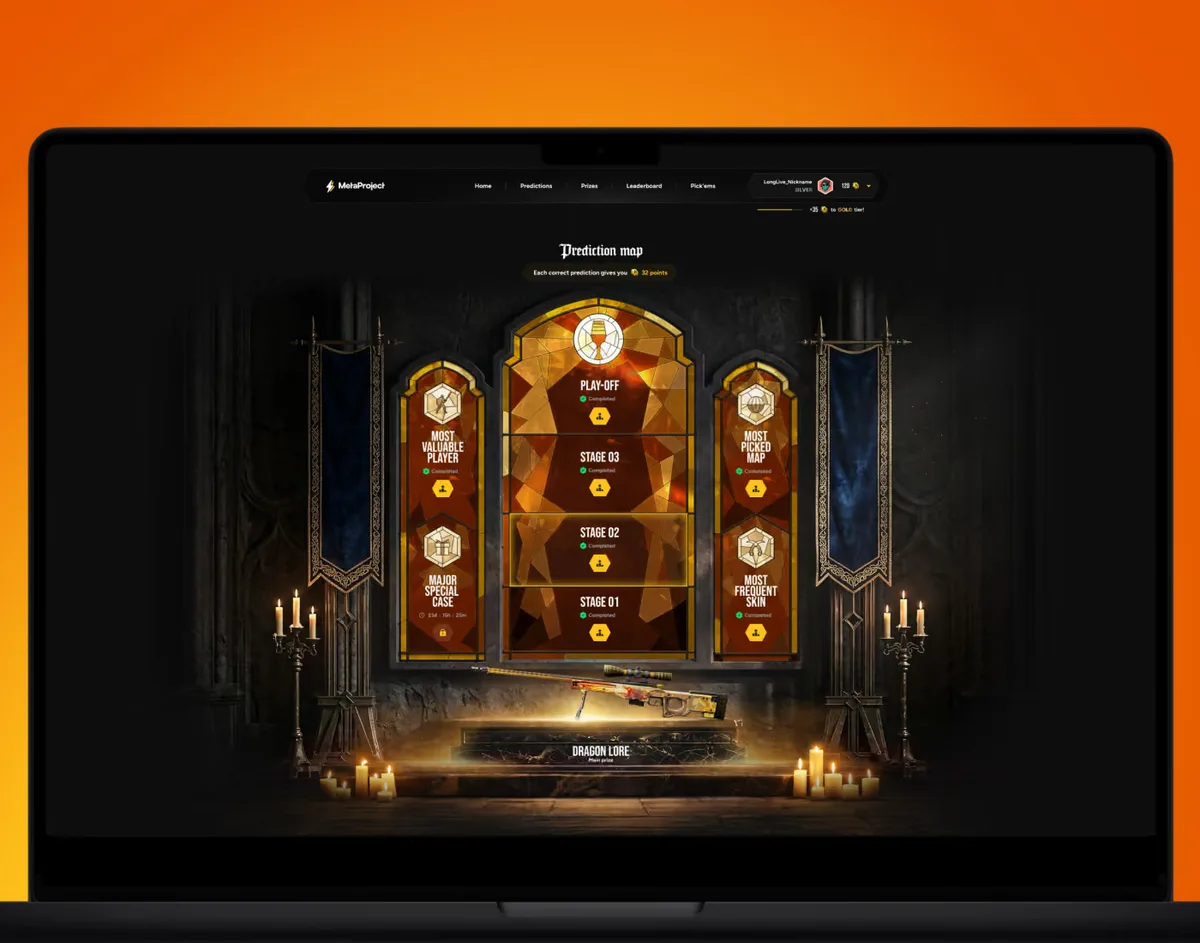
Pickem case5×
deployment frequency, from bi-weekly manual releases to daily automated ones
Clinical SaaS case+20%
faster delivery of changes on one standard stack
SLM ERP caseGreat digital products die on faulty foundations.
MetaProject delivers platform engineering consulting for teams whose delivery stack has become a source of risk instead of speed. You can have strong mobile and web teams, but if your pipelines, environments and runtime practices are shaky, every release feels like a gamble. We turn your delivery stack (CI/CD, environments, observability, DevOps and DevSecOps) into something teams can trust and your future CoE can own. This capability area focuses on the platform layer behind your apps and web experiences: CI/CD, environments, observability, DevOps and DevSecOps, plus the runbooks and playbooks that make change predictable.
What we help you build
We work with your teams to build and harden the platform capabilities that sit underneath:
Mobile apps. Native and cross-platform, with reliable build, test, and release flows.
Web applications. SPAs, portals, SaaS products, internal tools.
APIs, services & backends. Everything your apps and web frontends depend on.
CI/CD pipeline implementation and continuous delivery enablement.
Environment and release strategies for mobile, web, and backend.
Observability & monitoring setup that actually helps you debug.
DevOps / DevSecOps implementation and secure software supply chain.
Runbooks, SLOs/SLAs, incident practices, and production readiness.
The outcome: shipping becomes routine rather than heroic.
Pillar 1
CI/CD pipelines built for mobile, web & backend
We design and implement end-to-end CI/CD pipelines that reflect your architecture and risk profile. For mobile apps, that often includes:
Automated builds, tests, and checks for each platform.
Store and OTA release flows (TestFlight, Play Store tracks, internal distribution).
Versioning, rollout, and rollback strategies that don’t rely on luck.
For web & backend:
Build pipelines for SPAs, micro-frontends, and web backends.
API and service pipelines, with contract tests and integration checks.
Infrastructure-as-code integrated into the deployment flow.
On top, we define branching strategies and promotion paths (e.g. trunk-based vs long-lived branches, environments and promotion rules) so everyone understands how code moves from idea → commit → production.
Pillar 2
Environments & release strategies
A good platform also covers how you release change, beyond the CI pipeline. We help you define:
Environment strategy
How many environments you really need, and why (dev, test, staging, pre-prod, prod).
How data flows between them, and how to keep things safe & compliant.
Release & rollout patterns
Blue/green, canary, and feature-flagged releases.
Coordinating backend, web, and mobile changes without “big bang” deployments.
Release governance
What needs to be true before a release (checks, sign-offs).
How to keep governance lightweight but meaningful, especially in regulated spaces.
The goal: smaller, safer, more frequent releases – across all your channels.
Pillar 3
Observability & production readiness
If you can’t see what’s happening in production, you’re flying blind. We work with your teams to establish:
Logging, metrics & tracing
What to log, where, and how to structure it.
Metrics that matter (latency, error rate, saturation, user-centric signals).
Tracing for critical flows across services and channels.
Dashboards & alerts
Dashboards for product, engineering and operations, as well as infra.
Alerting tuned to SLOs and business impact, not noise.
Production readiness & incident response
Checklists and runbooks for going live and staying live.
Incident roles, playbooks, and post-incident review practices.
Capacity planning & load modelling
For known surge windows (launches, live events, seasonal peaks).
Queueing & graceful degradation
Backpressure patterns so core flows survive when dependencies don't.
Autoscaling & performance budgets
Baked into the platform and verified with load tests before an incident happens.
Proven in production
See the esports high-concurrency work in our case studies.
We turn “we think it’s fine” into “we can see it’s fine, and we know what to do when it’s not.”
Pillar 4
DevOps & DevSecOps in practice
DevOps is how engineering and operations work together, and you can’t hire it as a team.
Embed DevOps practices
Automation over handoffs.
Shared ownership of reliability between development and operations.
Platform treated as a product for internal teams.
Implement DevSecOps
Dashboards for product, engineering and operations, as well as infra.
Alerting tuned to SLOs and business impact, not noise.
Strengthen your secure software supply chain
Dependency policies and provenance.
Build signing, artifact management, and release traceability.
Our devops consulting embeds practices, not handoffs: automation over tickets, shared ownership of reliability, platform treated as a product.
The result is a platform that bakes security and compliance into how you ship, instead of bolting it on at the end.
Pillar 5
Developer experience & golden paths
A strong platform keeps production safe and also makes developers faster and happier. We work with you to establish:
Golden paths
Recommended ways to build a new service, web app, or mobile feature.
Templates and starter kits wired into your CI/CD and observability.
Self-service platform capabilities
Spin up environments and services with minimal friction.
Docs and tooling that let teams self-serve within safe guardrails.
Platform as product mindset
Clear ownership for the platform.
Feedback loops from product teams into platform roadmaps.
The result is a platform that bakes security and compliance into how you ship, instead of bolting it on at the end.
How we work with your teams
Platform Engineering isn’t something we do off in a corner. Our senior platform engineers and architects:
1
Embed with your squads and platform team, using your tools and repositories.
2
Map your current pipelines and their pain points with the people who live with them.
3
Design & implement improvements in the flow of real work, beyond PoCs.
4
Pair with and coach your engineers so they can own and extend the platform.
We’ll also work closely with your security, operations and compliance stakeholders so the platform supports their needs without blocking product teams.
Why this matters (multi-stakeholder view)
CTO / CIO
Confidence that your platform can carry new products into new markets.
A clear picture of platform capability today and what it will take to get to “CoE-grade”.
VP Engineering / Head of Platform / Head of DevOps
A coherent, documented platform that multiple teams can build on.
Less firefighting, fewer one-off pipelines, more reuse and consistency.
Product & Business leaders
Faster, more predictable releases for mobile and web products.
Less time lost to “release drama” and hidden technical constraints.
Engineering teams
Clear, supported ways to ship and monitor software.
Real input into platform direction instead of opaque central mandates.
Product & Business leaders
Security and compliance integrated into delivery, with audit trails by design.
Better visibility into what’s running where, and who changed what.
When to bring us in
Platform Engineering is especially valuable when:
Releases for mobile or web are slow, brittle, or scary.
Each team has its own pipeline and environments, and nobody trusts them.
You’re rolling out cloud migration, microservices, or a major SaaS initiative and need the plumbing to match.
You’re investing in DevOps/DevSecOps, but it hasn’t translated into day-to-day practices.
You know you need a platform team / CoE, but aren’t sure how to structure and bootstrap it.
See your platform in
a Capability Blueprint Workshop
Most organisations start by making the platform visible. In a Capability Blueprint Workshop, we map:
Your current CI/CD, environments, and release model,
How observability and security work in day-to-day operations,
And the first steps toward a platform your teams and future CoE can really own.
From there, we can build and harden that platform with your engineers, then leave you with the systems, playbooks and skills to keep it evolving without us.
Platform engineering cost
Platform work pays back in release speed, so we size it to the number of teams that will use the platform.
Platform assessment
$10k–$25k
Delivery metrics, bottlenecks and a platform roadmap.
Internal developer platform
$80k–$250k
Golden paths, CI/CD, environments and observability as self-service.
Embedded platform team
$25k–$45k/mo
Senior platform engineers working with your team until it runs the platform.
Typical ranges for engagements like this. Your number depends on scope, team size and how fast you need to move. Get a range for your project in two minutes.
5.0
★★★★★
“Everything was delivered within the timelines given and with high standards.”
Matt Davenport, Founder, App Software Company
★★★★★
“Their level of commitment and dedication to the success of the overall effort is their most impressive attribute.”
Wolf Berkych, Client Experience Manager, Glow Design Agency
Platform engineering FAQ
How much does platform engineering consulting cost?
A platform assessment costs $10k–$25k. Building an internal developer platform with golden paths and CI/CD typically costs $80k–$250k over 3–6 months. An embedded senior platform team costs $25k–$45k a month.
How long does it take to build an internal developer platform?
A first usable version takes 3–6 months: golden paths for the most common service type, CI/CD and environments. We hand it to an internal platform team that keeps extending it.
What is the difference between platform engineering and DevOps?
DevOps is a set of practices and a culture of shared ownership. Platform engineering builds an internal product, the platform, that makes those practices self-service for every team, so each team does not reinvent CI/CD, environments and observability.
Get an honest read on your platform and release process
Tell us what you are building. On a 30-minute call a senior engineer walks through your platform and release process. Or get a first view of the team and timeline in two minutes.