Book a call
Book a call
What we do

Generative AI & LLM Development Services

AI that reaches production — not another demo that never ships.
Most generative AI projects die in the gap between a promising prototype and a production system anyone can trust.
The demo works; then the questions start — how do we stop it hallucinating on real data, how do we keep PHI out of the model, how do we know it's actually getting better, and who operates it at 2am? MetaProject provides generative AI consulting and LLM development for teams that need AI features to survive that gap. We build LLM and RAG applications into real products — governed, evaluated, and compliant — and we do it embedded and senior-only, so the capability to run and improve the system stays with your team rather than leaving with a vendor.
Book a call

What we build

LLM applications and RAG systems. Retrieval-augmented generation over your own data, prompt and context pipelines, guardrails against hallucination and prompt injection, and the evaluation harness to know whether answers are actually right — not just plausible.
AI agents and workflows. LLM-driven automation of real workflows, with the tool-use, orchestration, and human-in-the-loop controls that make agents safe to put in front of users or operations.
AI integrated into existing products. Most valuable AI isn't a standalone app — it's a feature inside your product. We design the integration so it fits your architecture, respects your data boundaries, and degrades gracefully when the model does.
ML / LLM Ops. The engineering that keeps AI reliable in production — evaluation and monitoring frameworks, drift and regression detection, versioned prompts and models, cost controls, and PHI-safe inference pipelines. This is where most AI shops stop and we start (mlops consulting is a core part of what we do).
The data foundation AI needs. AI is only as good as the data under it. Where the foundation isn't ready, we build it — see Data Engineering.
Governed, compliant AI. For regulated products, we design AI systems with data classification, PHI/PII boundaries in training and inference, audit trails, and evaluation that satisfies clinical or compliance review — aligned to frameworks like FDA's Good Machine Learning Practice.

Principles: how we approach AI

1.
Production over demos.
A prototype that impresses in a meeting is easy; a system that's reliable, observable, and safe with real users and real data is the actual job. We optimise for the second.
2.
Not every problem needs an LLM.
The honest answer is sometimes "a simpler approach is cheaper and more reliable here." We'll tell you when generative AI is the wrong tool — the same way we'll tell you when microservices are.
3.
Evaluation, not vibes.
"It seems better" isn't a metric. We build evaluation into the system from the start, so quality is measured, regressions are caught, and improvements are provable.
4.
Governance from day one.
Data boundaries, PII/PHI handling, and audit trails are designed in — retrofitting them after a privacy incident is far more expensive.
4.
Capability transfer.
AI moves fast; a team that depends on a vendor for every change can't keep up. We leave your engineers able to run, evaluate, and evolve the system.

How we work with your teams

Our senior engineers embed with your team, in your repos and your accounts. We start from the real use case and the data behind it, build the smallest version that proves value with a proper evaluation harness, then harden it for production — observability, guardrails, cost controls, and governance. We author ADRs for the consequential decisions (build vs buy, RAG vs fine-tuning, model choice) and pair with your engineers so they own the system after we leave. See Delivery as Training and Exit by Design.

Why us, not a generic AI shop

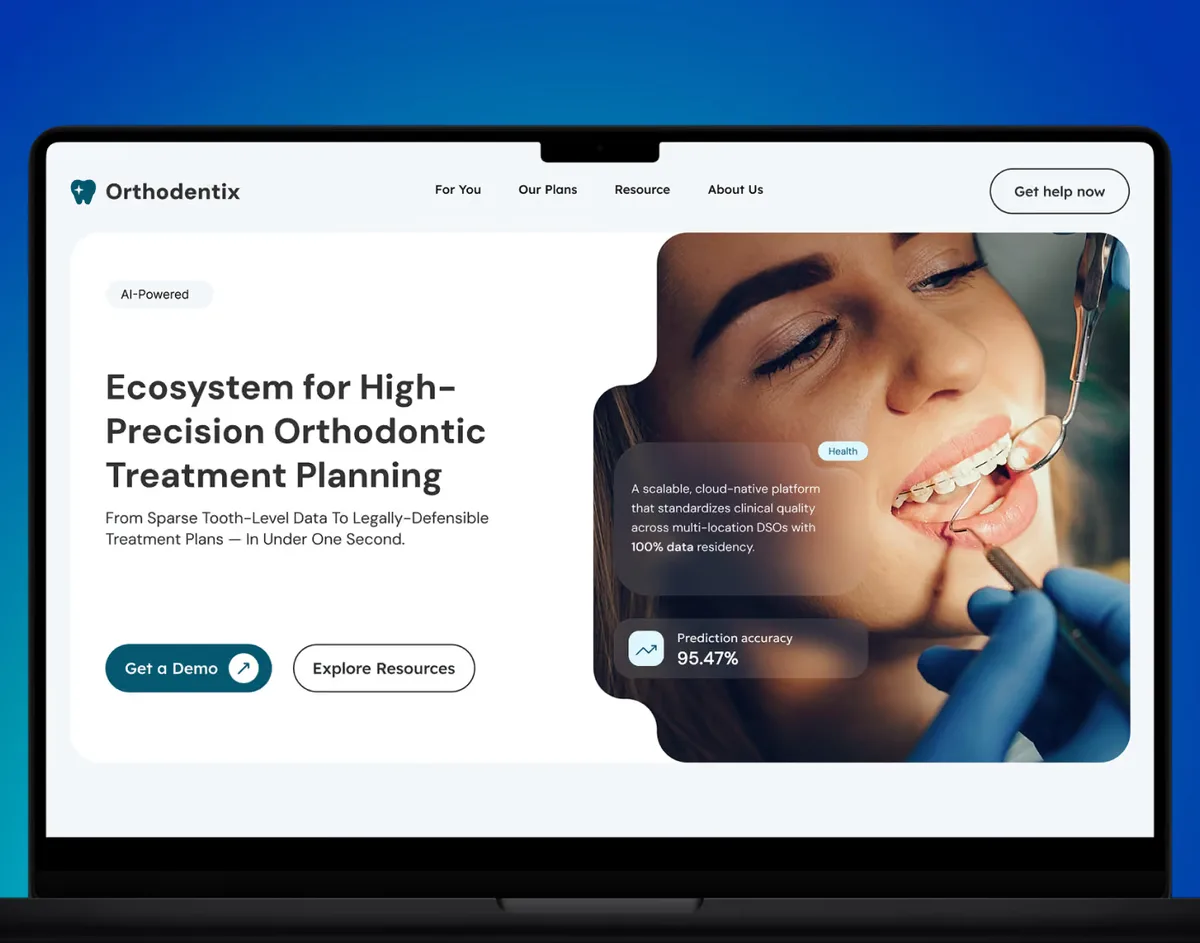
The market is full of teams that ship an impressive demo and a dependency. The demo isn't the hard part — production is. We bring senior engineers who have taken AI features into real, regulated products (see our healthcare software development work and the Orthodentix case), the discipline to evaluate rather than guess, and a model built around leaving you capable rather than dependent. If you want a flashy proof of concept, we're overkill. If you want AI in production that you can trust and own, we're the right fit.

When to bring us in

You have a promising AI prototype that has to become a real, reliable product feature.
You're adding LLM or generative AI features to an existing product and need them done safely.
Your AI outputs are inconsistent and you have no way to measure or improve quality.
You're building AI in a regulated context (healthcare, fintech) and need governance and PHI/PII boundaries designed in.
You need MLOps / LLMOps — evaluation, monitoring, and cost control — around models already in production.
You want AI capability built into your team, not rented indefinitely from a vendor.

F. A. Q.

Should we build with an LLM API, fine-tune, or use RAG?

It depends on the use case. Most business applications start with a strong base model plus retrieval-augmented generation (RAG) over your own data — it's faster, cheaper, and easier to keep current than fine-tuning. Fine-tuning earns its cost for narrow, high-volume tasks where prompt-and-retrieve isn't enough. We help you decide deliberately rather than defaulting to the most expensive option.

How do you stop an LLM from hallucinating?

You can't eliminate it, but you can engineer it down to an acceptable level: retrieval grounding, guardrails, output validation, confidence thresholds, human-in-the-loop where stakes are high, and — critically — an evaluation harness that measures how often it happens so you can improve it.

Is our data ready for AI?

Often not fully, and that's normal. AI quality depends on the data foundation underneath it. Where it's not ready, we build the pipelines and governance first — see Data Engineering — rather than putting an LLM on top of unreliable data.

Can you build AI for a regulated product (healthcare, fintech)?

Yes — it's a core strength. We design AI systems with PHI/PII boundaries in training and inference, audit trails, and evaluation that satisfies clinical or compliance review, aligned to standards like FDA GMLP.

Will the AI actually reach production, or just be a demo?

Production is the whole point of how we work. We build evaluation, observability, guardrails, and governance in from the start, and we don't consider an engagement done until the system is reliable in production and your team can operate it.

Get an honest read on your AI initiative
In a 4-week Blueprint Sprint, we assess your use case, your data readiness, and the path to production — including, where it's the right call, the recommendation that a simpler approach beats an LLM.
Start your Blueprint Sprint