What Is a Center of Excellence (and How to Build One)
A Center of Excellence (CoE) is a small, senior team inside an organisation that concentrates expertise, standards, and best practices around a specific capability, and helps every other team apply them. In engineering, a CoE typically owns architecture, platform, and delivery practices: it sets the standards, curates the patterns, coaches the squads, and stewards the long-term evolution of the system. The point is to give a fast-growing organisation a coherent "home" for the decisions that would otherwise be made inconsistently in a dozen places, without centralising control. Done well, a CoE raises the floor for every team. Done badly, it becomes either a toothless advisory group or a heavy-handed gatekeeper. That's why how you design one matters as much as whether you have one.
Why organisations build a Center of Excellence
As a company scales past a handful of teams, the same problems recur: architecture drifts because every squad makes independently reasonable decisions; onboarding slows because there's no shared handbook; the same trade-offs get relitigated every quarter; and critical knowledge lives in a few people's heads (or a vendor's). A CoE exists to solve exactly these: to turn scattered, tribal knowledge into shared, teachable practice, so the organisation can grow without fragmenting.
What a Center of Excellence actually does
The core functions of an engineering CoE usually include:
- Standards and patterns: architecture principles, API and eventing standards, reference designs, and the ADRs that record why decisions were made.
- Platform and paved roads: self-service capabilities (CI/CD, observability, secrets, deployment) so squads inherit good defaults instead of reinventing them.
- Coaching and enablement: mentoring, guilds, and communities of practice that spread capability rather than hoarding it.
- Governance that's light, not bureaucratic. Clear decision rights: what the CoE enforces, what squads own, what gets reviewed, and how exceptions are handled without blocking progress.
Common Center of Excellence models
There's no single right shape. The model should fit your scale and culture:
- Centralised CoE: a dedicated team owns the capability and delivers it to the rest of the org. Strong consistency, but risks becoming a bottleneck if it takes work away from squads.
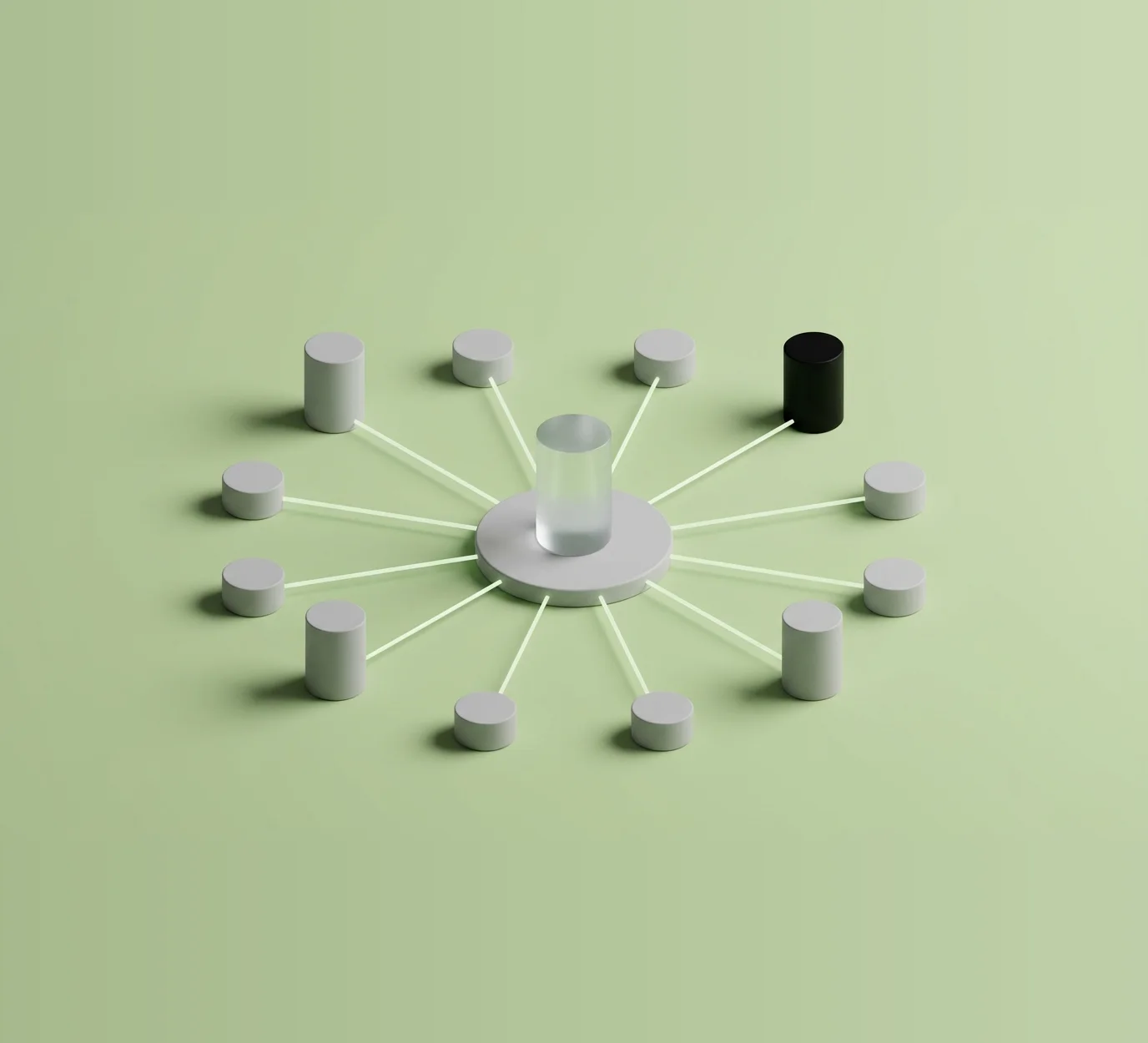
- Federated / hub-and-spoke: a small core sets standards while embedded experts in each squad apply and adapt them. Usually the healthiest model for engineering: coherence without central choke points.
- Virtual / guild-based: no dedicated headcount; senior engineers from across teams form a rotating body that curates practices. Lightweight, good for smaller organisations.
- Build-Operate-Transfer (BOT): a partner stands up the capability, runs it for an agreed period, then transfers full ownership to you. Useful when you lack the in-house experience to start, provided the transfer is real and time-boxed.
How to build a Center of Excellence
A practical sequence that avoids the two failure modes (ivory tower and rubber stamp):
Define purpose and scope. What problems is the CoE here to solve, and what does success look like in 12–24 months? Be explicit about what it does not own (e.g. day-to-day squad delivery).
Assess current maturity. Map where you are across architecture, platform, delivery, and people, including the "unofficial CoE" experts you already have.
Design the operating model and governance. Define the services it offers, its interfaces with squads, its forums and cadences, and how standards get proposed, tested, and adopted.
Staff it deliberately. Decide the roles (Principal/Staff engineers, platform leads, DevEx), what you have internally, and where you need to hire or partner, with a phased hiring roadmap.
Run capability-uplift programmes. Use real work on real products as the training ground (embedded mentorship, playbooks, guilds) so the CoE builds capability rather than becoming a committee.
Start with a focused pilot, then scale. Prove the model on one domain, measure the outcome, and expand based on demonstrated value.
The pitfalls to avoid
- The ivory tower. A CoE that mandates standards without doing the work loses credibility fast. The strongest CoEs coach and build alongside squads.
- The bottleneck. If every decision must route through the CoE, delivery slows and squads route around it. Governance should be lightweight and exception-friendly.
- Vendor-owned expertise. If the capability lives with an external partner with no transfer plan, you've built dependency, not a CoE. Insist that knowledge lands in your team. See the real cost of vendor lock-in.
- A CoE without coaches. A CoE staffed by people who can't mentor is just a committee. Coaching capacity is the point.

Center of Excellence FAQ
A small senior team that owns architecture, platform, and engineering standards for the organisation. It sets patterns, runs paved roads, coaches squads, and stewards long-term technical decisions, without taking delivery ownership away from the teams.
Centralised, federated (hub-and-spoke), virtual/guild-based, and build-operate-transfer. For engineering, the federated model (a small core plus embedded experts in each squad) is usually the healthiest.
Standing up a functioning CoE and transitioning ownership typically runs 9–24 months, depending on scale and starting maturity. Start with a focused pilot rather than a big-bang launch.
Overlapping but not identical. A platform team builds and runs the internal developer platform; a CoE has a broader remit that also covers architecture standards, engineering practices, coaching, and governance. In many orgs the platform team is part of the CoE.
Keep governance lightweight and exception-friendly, use a federated model so experts sit inside squads, and measure the CoE on whether it raises delivery velocity, not on how many approvals it issues.
Tell us what you are building. On a 30-minute call a senior engineer walks through your engineering organisation and where a CoE fits. Or get a first view of the team and timeline in two minutes.