Book a call
What we do

Legacy Modernization Services

Move off legacy without freezing the business or burning out the team.
Results from our modernization work
0
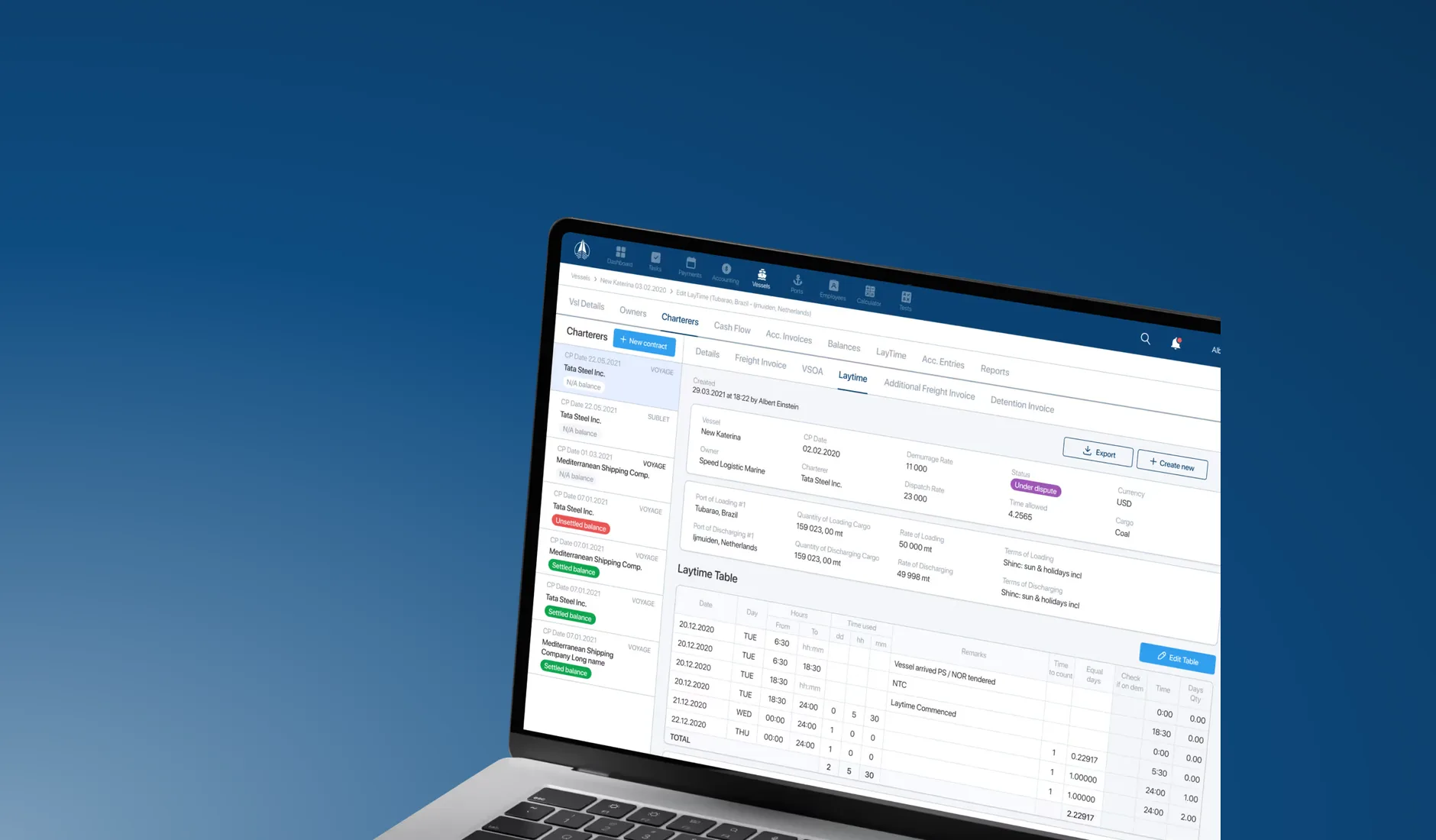
stops to logistics operations during the platform switch
SLM ERP case
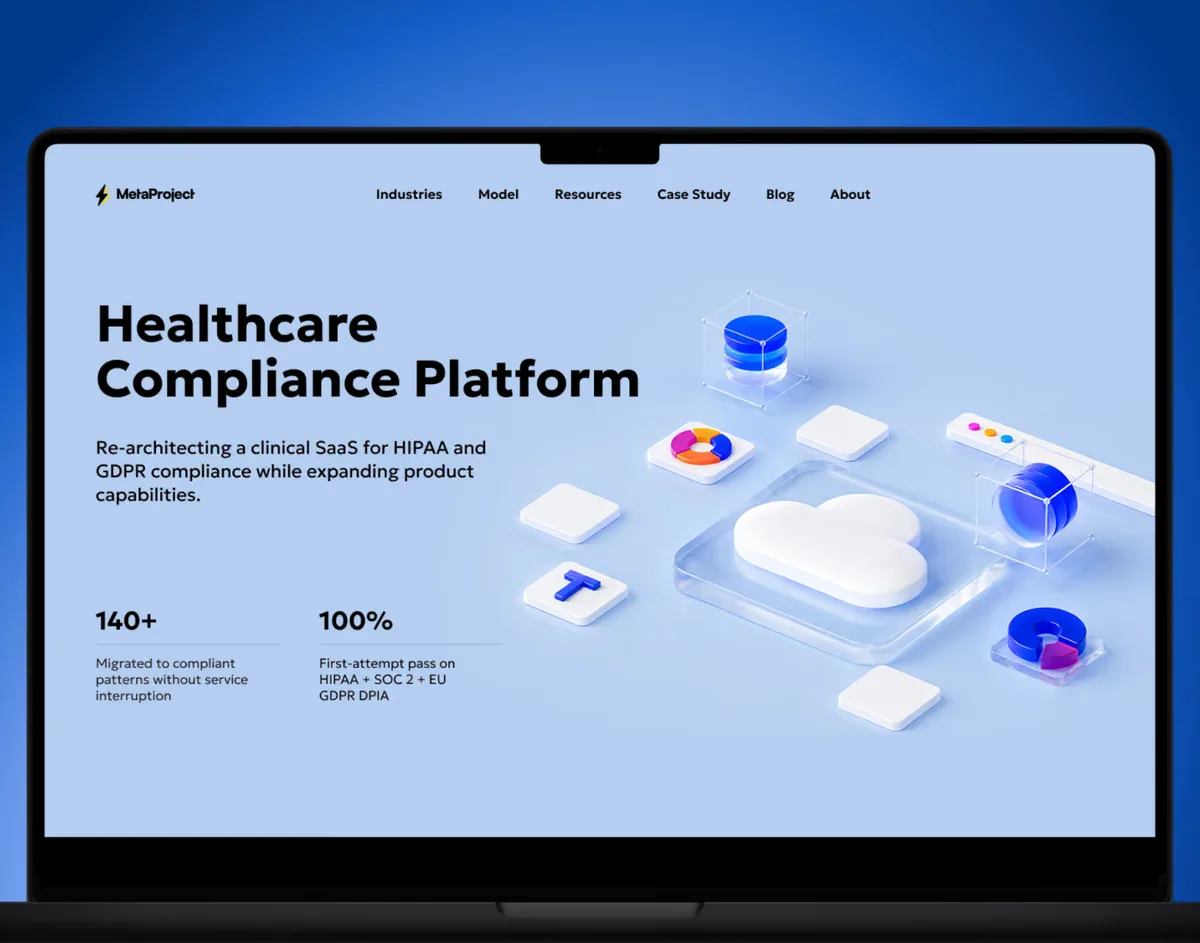
140+
endpoints moved to one compliant pattern without service interruption
Clinical SaaS case
+20%
faster delivery of changes on one standard stack
SLM ERP case

MetaProject provides legacy and application modernization services for teams stuck between a system they can't easily change and a business that can't stop. Most legacy systems didn't start as legacy. The constraints changed, the original team rotated, and every new feature now takes three times longer than it should.

A full rewrite is rarely realistic; a complete freeze is rarely acceptable. We deliver a modernization path the business can absorb, and a team that can keep running it after the transition.

What we help you build

We help you design and execute a modernization path that is calibrated to your constraints: regulatory, operational, financial, and human. By the end of an engagement, you have:
A current-state assessment: what your legacy actually does, what it depends on, who touches it, and where the risk lives
A target-state architecture that is a realistic destination with explicit trade-offs instead of a blue-sky redesign
A modernization roadmap: sliced into steps and ordered by risk and value rather than by tech preference
Strangler-fig and slice-based migration patterns that let you ship value continuously, rather than waiting for "the big switch"
Architecture Decision Records (ADRs) for every consequential choice, so the rationale survives team changes
An operating model for the post-modernization platform, including who owns what and how decisions are made
The deliverable is not a slide deck. It is a moving system, an internalized practice, and a team that owns both.

How we approach modernization

HOW WE APPROACH MODERNIZATION

We bring opinions, but they're shaped by the situation, not by a fixed methodology.
1.
Modernization is a portfolio decision, not a technical one.
Different parts of your legacy carry different risks, deliver different value, and have different change frequencies. The first job is to map them and choose where to invest first.
2.
Replatform, refactor, rewrite, retain, retire.
Each has its place. The standard "6 Rs" framework still applies, but it's a tool, not a doctrine. We help you decide, per component, which path is appropriate and why.
3.
The business cannot freeze.
Whatever the modernization plan looks like, it has to coexist with ongoing product work. The strangler fig pattern, well-bounded migration slices, and parallel running are how we make that work.
4.
Migrations fail at the edges.
Most modernization failures happen outside the new code: in data migration, integration with surrounding systems, user behaviour changes and operational handover. We plan for the edges from week one.
5.
A "Big Bang" migration is almost always wrong.
We have only seen them succeed in narrowly bounded contexts, and even then under heavy duress. We design for incremental cutover by default.

What we help you build, in detail

What we help you build, in detail

1
Current-state assessment
We start with a clear-eyed map of where you are. Depending on the scope, this includes:
Service and module inventory
What exists, what it does, who calls it
Code-level analysis
Hot spots, churn, complexity, technical debt clusters
Data flow and integration map
What speaks to what, how, and how often
Dependency analysis
Frameworks, libraries, runtime versions, vendor contracts
Runtime profile
What's actually used, what's dead code, what's load-bearing
People map
Who knows what, where the bus factor is uncomfortably low
Risk register
The things that, if they break, cost you customers
This is not a 90-page report. It's a working artifact your team can act on.
2
Target-state architecture
We help you define a target that is reachable, not aspirational:
Architecture diagrams at multiple zoom levels (context, container, component)
Service boundaries aligned with business domains, not historical accident
Data ownership and integration patterns for the new world
Tech stack choices that match your team's skills and your operational reality
Cross-cutting concerns (identity, observability, security, compliance) designed once
The target is documented as a set of living artefacts (diagrams, ADRs, blueprints), all stored in your repos and wiki. Not in a vendor's slide deck.
3
Modernization roadmap
The roadmap is where most modernizations either succeed or die. We help you sequence the work so that:
Each slice delivers value, so there is never a multi-month migration with no visible progress
High-risk work is de-risked first with proofs of concept, spike work and vertical slices through the full stack
Operational handover is built into each slice instead of deferred until the end
The business roadmap continues: product work and modernization run in parallel, with explicit coordination
We typically frame the roadmap in 3–6 month horizons, with quarterly reviews. We do not produce 2-year plans; the world moves too fast and so do you.
4
Migration patterns we use
The patterns aren't novel. The execution is.
Strangler fig
Wrap the legacy, route new functionality through the wrapper, gradually replace components behind it
Branch by abstraction
Introduce an abstraction layer over the part you'll replace, swap implementations behind it
Parallel run
Run old and new side by side, compare outputs, cut over only when confidence is high
Migration slice
A vertical cut through the full stack, end-to-end, for one bounded use case
Replatforming with refactoring
Lift to a new platform, but with targeted refactoring of high-pain areas during the move
5
Data migration
This is where most modernizations underestimate themselves by 3×. We treat data migration as a first-class workstream:
Schema mapping and transformation rules
documented and reviewed
Migration scripts
with idempotency, restart-ability, and observability built in
Reconciliation reports
automated comparison of old and new, every run
Cutover plans
staged, with rollback paths, and rehearsed
6
Operational handover
Modernization is not finished when the code is deployed. It's finished when your team can operate the new system without us:
Runbooks for every recurring operation
Incident response playbooks for the most likely failure modes
Monitoring and alerting aligned with the new architecture (not copy-pasted from the legacy)
Skills matrix: an explicit map of who can do what
Training and pairing until the matrix has no single points of failure

How we work with your teams

A modernization engagement is the opposite of a "drop and deliver" project. Our seniors embed in your engineering organisation and:
Co-design the target state with your architects and tech leads
Co-execute the first slices so your team sees what we do and how we approach the unknowns
Lead the architecture forum for the first phase, then hand it off to your CoE
Author the ADRs that capture the trade-offs everyone will forget by next quarter
Mentor your seniors through the modernization decisions, so they own the next ones
We are senior-only, with experience across multiple modernization patterns. We don't learn replatforming on your time.

Why this matters (multi-stakeholder view)

Why this matters (multi-stakeholder view)

CTO / CIO
‍
‍
A defensible modernization plan with quarterly milestones, real progress, and a clear endpoint. No multi-year fog.
VP Engineering
‍
‍
Engineering capacity not consumed by firefighting the legacy. Clear ownership of standards and decisions, even as the architecture changes underneath the team.
CFO / Finance
‍
‍
A modernization investment with measurable returns at each phase, from lower operational and vendor license costs to a lower cost of change. Not a black hole.
Product & Business leaders
‍
‍
Continuous shipping during modernization. Modernization doesn't become an excuse to freeze the roadmap.
Engineering teams
‍
‍
Patterns and references they can apply, not a 200-page target diagram they're expected to figure out.

When to bring us in

This capability area is especially valuable when you are:
Trying to move off a monolith
The monolith has resisted decomposition for years.
Migrating from on-prem or co-lo to cloud
You recognise that lift-and-shift won't deliver the savings you need.
Replacing a legacy vendor platform
Mainframe, ERP or a custom-built decade-old stack, replaced without a multi-year freeze.
Carrying technical debt that is starting to threaten your product roadmap
Every new feature now requires legacy archaeology.
Reckoning with end-of-life risk
Frameworks, runtimes, or vendors are approaching unsupported status.
If any of these are true, modernization is no longer optional. The only question is how to do it without breaking the business.

Legacy modernization cost

Modernization is funded in phases, so you commit to the next slice only after the previous one has paid off.
Assessment
$15k–$40k
3–6 weeks
Inventory, risk register, target state and a per-component plan.
Component modernization
$80k–$250k
3–9 months
One domain or module replatformed or rebuilt while the business keeps shipping.
Full platform
$250k–$1M+
9–24 months
Sequenced migration of the whole system, data included, with handover.
Typical ranges for engagements like this. Your number depends on scope, team size and how fast you need to move. Get a range for your project in two minutes.The method behind these phases is in our legacy system modernization playbook.
5.0
Rated on Clutch from 16 verified client reviews. Read the reviews on Clutch
★★★★★

“Everything was delivered within the timelines given and with high standards.”

Matt Davenport, Founder, App Software Company
★★★★★

“Their level of commitment and dedication to the success of the overall effort is their most impressive attribute.”

Wolf Berkych, Client Experience Manager, Glow Design Agency

Legacy modernization FAQ

How much does legacy modernization cost?

An assessment costs $15k–$40k. Modernizing one component or domain typically costs $80k–$250k; a full platform migration ranges from $250k to over $1M across 9–24 months. Each phase is priced separately.

How long does a typical modernization take?

It depends on scope and risk tolerance, but most engagements we run are 9–18 months end-to-end. The first 3 months focus on assessment and target-state definition. The next 6–12 months execute the modernization in slices. The final phase is operational handover and capability transition.

Should we rewrite, refactor, or replatform?

Almost always a mix. Rewrites are rare and risky. Replatforming (moving to a new platform with targeted refactoring) is the most common pattern for cloud migrations. Refactoring in place is right when the architecture is fundamentally sound but specific areas need surgery. We help you decide per component, not for the whole system.

Can we modernize while continuing to ship product features?

Yes. That's how we design every modernization. Strangler-fig and slice-based patterns explicitly support parallel product work. Engagements that require a feature freeze are red flags.

What if our legacy has no tests?

Common. We use characterization tests, contract tests, and parallel-run reconciliation to establish a safety net before changing anything. The modernization includes building the test coverage as we go.

How do you handle data migration?

As a first-class workstream, not an afterthought. Every modernization includes explicit data migration design, scripted and idempotent migration runs, automated reconciliation, and rehearsed cutover plans.

Get an honest read on your modernization options

Tell us what you are building. On a 30-minute call a senior engineer walks through your legacy system and a safe path forward. Or get a first view of the team and timeline in two minutes.