An MVP built with us comes with:
What we do
MVP Development Services
Ship the MVP fast, without building something you'll have to throw away.
Results from products we launched
50,000+
installs in the first two months
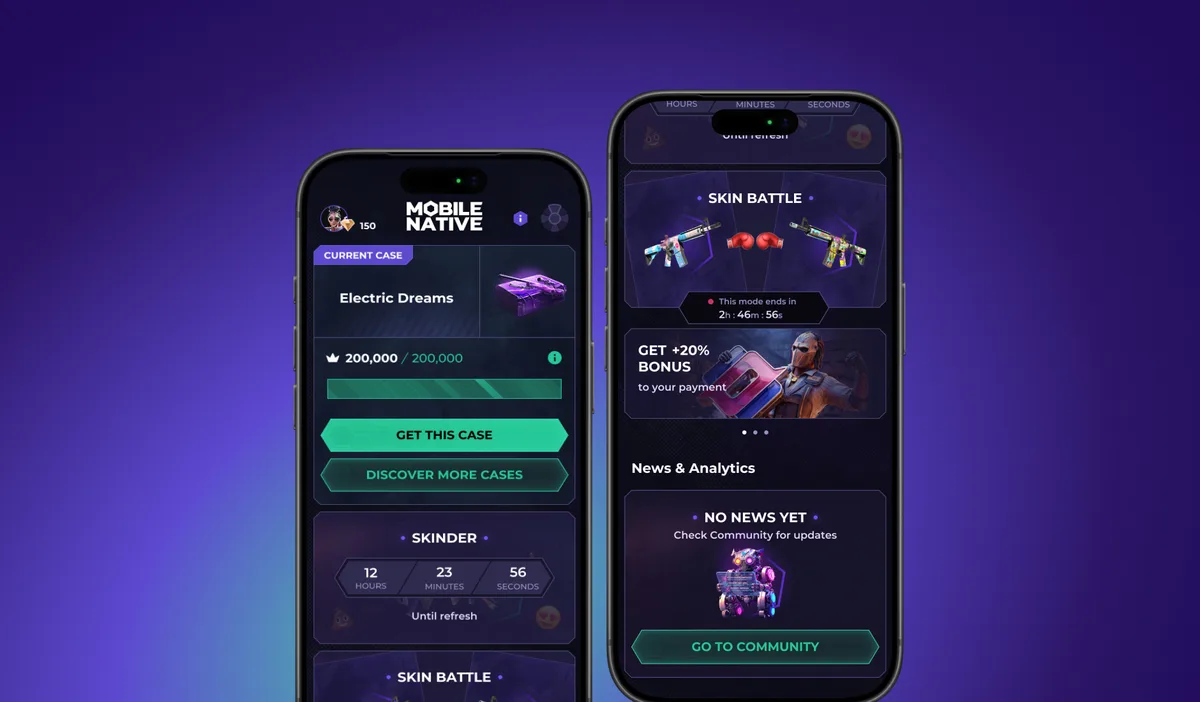
Mobile companion case4.8
average rating in the App Store and Google Play
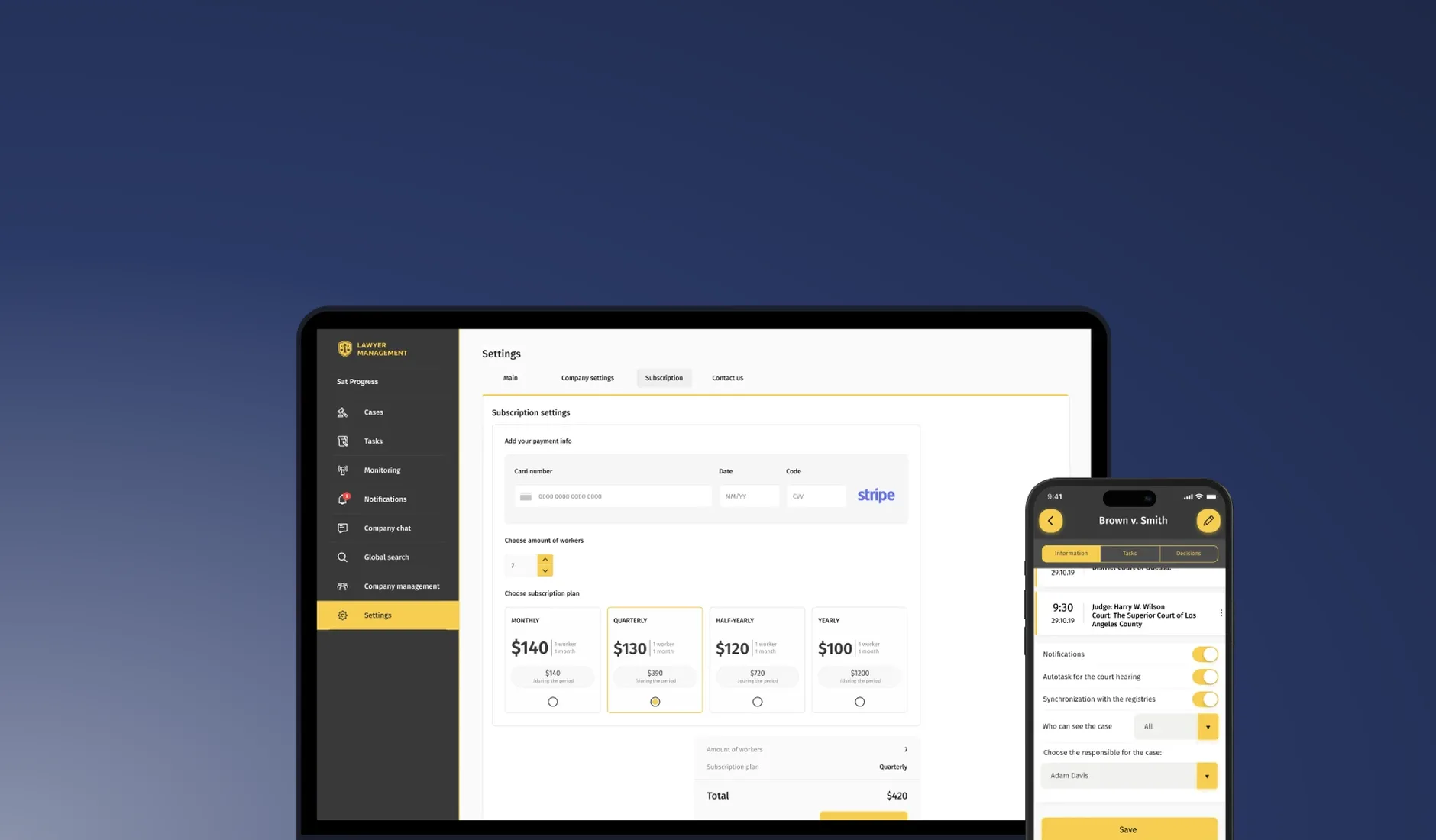
Legal platform case8 months
from discovery to launch in three regions
Welcome Renovation caseMetaProject provides MVP development services for founders who need to get a real product in front of real users quickly, but can't afford the two things that usually go wrong: a slow, over-engineered build that burns the runway, or a fast, throwaway prototype that collapses the moment it gets traction.
We build MVPs the way a senior team builds them: the smallest thing that truly validates the idea, on an architecture that can grow if the idea works. We call it an MVP with an exit plan: you get to market fast, and you're not left with a codebase you have to rewrite the week after product-market fit.
What you get
A working product in front of users fast: scoped to the core hypothesis instead of a feature wishlist.
A clean, sensible architecture that can scale if the product takes off. No gold-plating, and no foundations you'll regret either.
Senior engineers building it , not a junior team learning on your runway.
Clear ownership of the code, infrastructure, and accounts: it's all yours, from day one.
A documented handover so you (or your first in-house hires) can pick it up without us.
How we work
We start by pinning down the real hypothesis: what has to be true for this to work, and the smallest product that tests it. Then a senior pod builds it in short cycles, shipping something usable early and iterating on real feedback rather than guessing. Everything lives in your repos and your accounts. Because we're senior-only, we make the pragmatic calls fast: what to build now, what to fake, what to defer. That judgment keeps an MVP small without painting you into a corner. When the MVP is live and learning, we hand over cleanly, whether you're hiring a founding engineer, raising to build a team, or continuing with us.
Why us, not a cheap dev shop
The commodity option, an offshore team billing by the hour, optimises for getting code written. That's not your problem. Your problem is validating an idea and keeping the door open to scale, on a runway that doesn't forgive rework. A cheap build that has to be rewritten after your first real users is the most expensive kind. We bring senior judgment, a bias for the smallest honest scope, and an architecture that won't trap you. We're structured to hand the product to your team rather than keep you dependent. If you need experienced technical leadership alongside the build, see Fractional CTO.
When to bring us in
You have a validated-enough idea and need a real product in front of users to test it.
You're pre- or early-seed and every week of runway counts.
You've been quoted a 9-month build for something that should take weeks.
You've got an MVP that's buckling under early traction and need it stabilised without a full rewrite.
You're non-technical (or technical but stretched) and need a senior team you can trust to make the right calls.
MVP development cost and timeline
What an MVP costs depends on how much has to be true on day one: integrations, compliance and AI move the number more than screens do.
Prototype or PoC
$15k–$40k
Proves one risky assumption: a model, an integration or a workflow.
MVP
$50k–$150k
One core workflow, real users, payments and analytics, production-ready.
Complex MVP
$150k–$300k
Regulated data, several integrations or AI at the core of the product.
Typical ranges for engagements like this. Your number depends on scope, team size and how fast you need to move. Get a range for your project in two minutes.What drives these numbers is broken down in our MVP development cost guide.
Our MVP development process
Ten to sixteen weeks from the first call to real users, in five steps.
Weeks 1–2
Discovery
The hypothesis, the first users, the one workflow that proves it and the metric that says it worked.
Weeks 2–3
Design and architecture
Clickable flows, the data model, the stack and the first ADRs, sized for the next stage, not for a rewrite.
Weeks 3–12
Build in two-week cycles
A demo every cycle and real users from the first usable build. Scope moves; the launch date does not.
Launch
Release and measure
App Store, Google Play or production web, with analytics on the key metric and monitoring from day one.
After launch
Iterate or hand over
Iterate on real usage, then hand the code, docs and accounts to your team, or keep building with us.
What goes into an MVP, and what waits
Most MVPs run late because of what was added, not what was hard. We agree this list in week one.
In the MVP
- One core workflow, end to end
- Sign-up, login and payments if the business model needs them
- Analytics on the metric that proves the idea
- Admin tools only where operations would break without them
- Production basics: backups, monitoring, security headers, access control
After traction
- Every role and permission you will need at scale
- Integrations the hypothesis does not depend on
- Native apps on both platforms when a web app proves the point
- Multi-language and multi-currency before the first market works
- A custom design system
MVP tech stack
The stack we used in the MVPs in our case studies. We default to tools your first hires already know.
Mobile
Native Swift and SwiftUI on iOS, Kotlin and Jetpack Compose on Android.
Web
Next.js and TypeScript, or Vue where a team already uses it.
Backend
Node.js with NestJS, Python or .NET, chosen by what your future team can hire for.
Data and cloud
PostgreSQL and Redis on AWS, with Stripe for payments and infrastructure in your own accounts.
5.0
★★★★★
“Everything was delivered within the timelines given and with high standards.”
Matt Davenport, Founder, App Software Company
★★★★★
“Their iOS and Android dev teams are highly-qualified professionals.”
Artem Isakov, Head of Software Development, DeepVision
MVP development FAQ
How much does MVP development cost?
Most MVPs we see cost $50k–$150k and take 10–16 weeks. A prototype that tests one assumption costs $15k–$40k; an MVP with regulated data, several integrations or AI at the core costs $150k–$300k.
How long does an MVP take to build?
Most MVPs we build ship a usable first version in weeks. The exact timeline depends on scope, but our whole approach is to find the smallest version that validates the idea. If someone quotes you many months for an MVP, they're probably building more than an MVP.
Will the MVP be throwaway code?
No. That's the point of "MVP with an exit plan". We keep the scope minimal but the foundations clean, so if the product finds traction you can build on it rather than rewrite it.
Do we own the code?
Yes, entirely. Code, infrastructure, and accounts are in your control from day one. No lock-in.
What happens after the MVP?
Your choice. We hand over cleanly so you can bring it in-house, keep iterating with us, or hire a founding team. The engagement isn't designed to make you dependent on us.
We're non-technical founders. Can you still help?
Yes. Many of our MVP clients are non-technical or stretched-technical founders. We provide the senior judgment; if you also need ongoing technical leadership, we can pair the build with a fractional CTO.
Get a scoped plan for your MVP.
Tell us what you are building. On a 30-minute call a senior engineer walks through your MVP scope and launch plan. Or get a first view of the team and timeline in two minutes.