Concretely, that covers:
What we do
Product Operating Model Design
How work flows from idea to impact.
Results from our delivery work
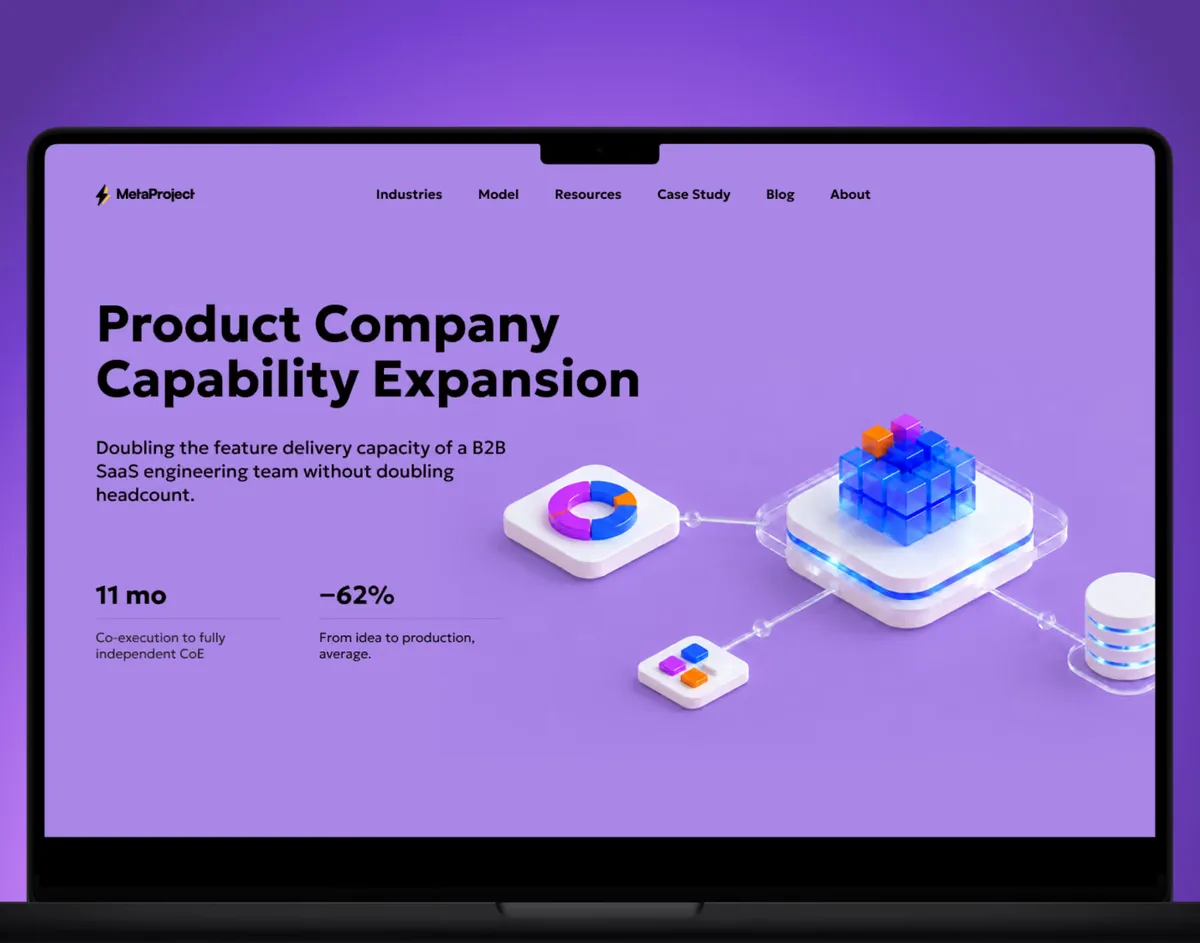
2.1×
delivery capacity with the same team size
B2B SaaS case−62%
time from idea to production
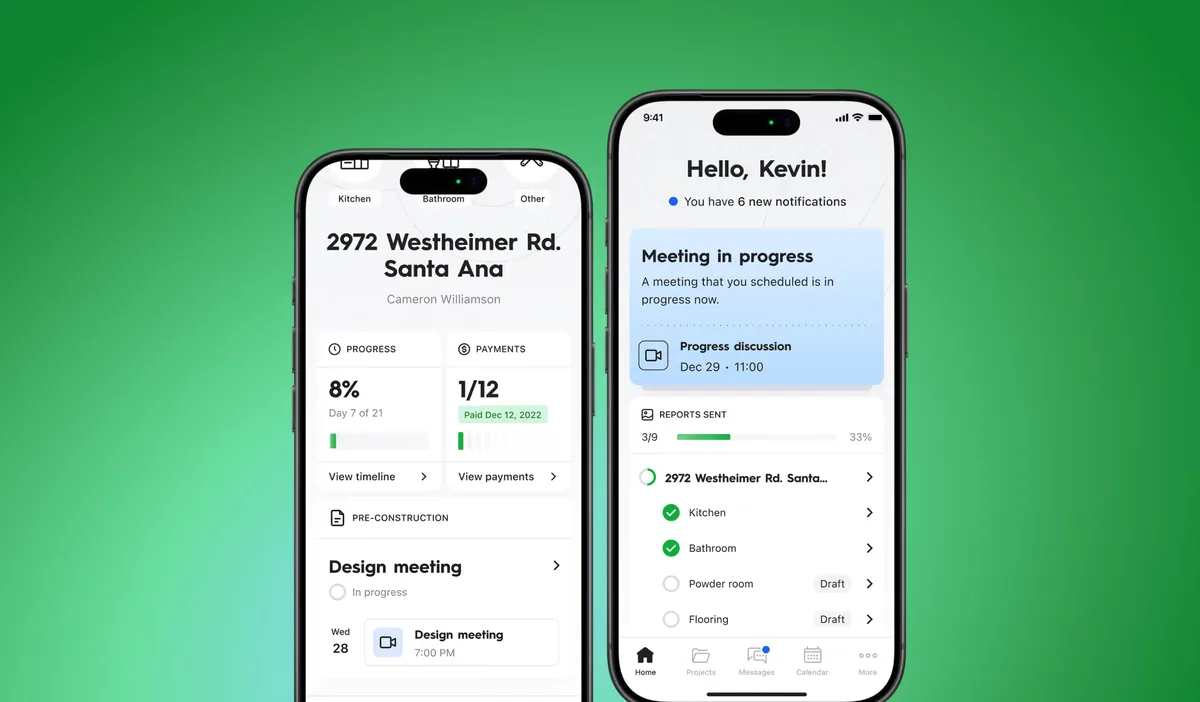
B2B SaaS case8 months
from discovery to launch in three regions
Welcome Renovation caseYou can have great engineers and a solid platform, and still struggle to ship meaningful change.
If your product & delivery operating model is unclear, work gets stuck in handoffs and endless re-prioritisation. Teams are busy, but outcomes are fuzzy. Releases land... and nobody is quite sure whether they made a difference. This capability area is about how work actually flows in your organisation, from insight to idea to shipped software, and how product, engineering and operations make decisions together. We don’t drop a new process on top of you. We help you design and evolve an operating model that fits your digital products (mobile, web, platforms) and the people who build them.
What we help you build
We work with you to design and embed a product & delivery operating model that’s:
Outcome-driven. Roadmaps for mobile, web, and platform tied to measurable results, not feature wishlists.
Cross-functional. Product, engineering, design, data and operations working as real squads.
Continuous. Discovery and delivery happening together, not in separate phases.
Governed, not bureaucratic. Clear decision rights and lightweight guardrails.
How ideas become bets, then backlog, then releases.
How product, design, and engineering collaborate day-to-day.
How risk is managed (tech, business, compliance) without killing speed.
How multiple squads stay aligned on shared mobile, web, and platform goals.
Pillar 1
Outcomes before output
“New mobile app for X”
“Increase self-service completion rate on mobile from 40% → 65%”
“Redesign the web portal”
“Reduce onboarding time on web from 14 days → 4 days”
We help you:
Define North Star metrics and supporting KPIs for key journeys.
Translate strategy into product bets and hypotheses.
Connect epics and backlog items to the outcomes they’re supposed to move.
This gives every squad a clear answer to “what are we actually trying to change?” and a way to decide what not to build.
Pillar 2
Discovery in the cadence, not as a phase
Discovery isn’t a one-off “phase zero”. It’s a habit. We design ways of working where discovery and delivery live side by side:
Regular user conversations and research plugged into the squad’s routine.
Lightweight experiments and prototypes on mobile/web before committing to big builds.
Clear practices for testing assumptions and killing bad ideas early.
That might look like:
Dual-track discovery/delivery for key product areas.
Specific discovery cadences per squad (weekly interviews, monthly deep dives, etc.).
Simple artefacts (opportunity trees, experiment backlogs) that your teams can maintain.
The result: fewer six-month bets based on “we think”, more small, validated steps.
Pillar 3
Ways of working for cross-functional squads
We help you design how squads actually work day-to-day across mobile, web, and platform initiatives. That includes:
Squad composition & responsibilities
Product, engineering, design, QA, data: who’s in and who’s around.
Clear roles (who owns outcome, who owns solution, who owns quality).
Rituals that serve outcomes
Planning, standups, reviews, retros tailored to the type of work.
Design & architecture reviews that fit into the cadence instead of blocking it.
Decision-making patterns
When squads decide vs when leadership decides.
How to handle cross-squad dependencies without everything escalating.
We favour lightweight, explicit patterns over heavyweight frameworks: just enough structure for squads to move fast without tripping over each other.
Pillar 4
Flow of work & portfolio visibility
Many organisations don’t have a delivery problem; they have a work-in-progress problem. We work with you to:
Clarify how work enters the system
From ideas / sales / customer success / leadership into something prioritised.
Criteria for saying “no” or “not now”.
Manage WIP and focus
Limits on how many big things a squad or portfolio can do at once.
Visualising work across squads so you can spot bottlenecks.
Improve portfolio visibility
Simple, honest views of what’s in flight for mobile, web, and platform.
Status tied to outcomes and risks as well as dates.
This makes it easier for executives and product leaders to see where effort is going and whether it lines up with strategy.
Pillar 5
Release governance & QA that scale
Your operating model has to answer: “what does it take to get something into the hands of users?” We help you design:
Release governance
Criteria for release readiness tied to risk (e.g. new regulated feature vs UI tweak).
Who signs off on what, and how to keep it lean.
Testing & quality strategy
Test pyramid per product: unit, integration, E2E, exploratory, performance.
Automation where it matters most (e.g. payments, onboarding, auth flows).
Change & rollout strategies
Coordinating backend, web, and mobile releases.
Feature flags, canary releases, and gradual rollouts.
Combined with Platform Engineering, this gives you a clear, repeatable path from “ready for dev” to “live in production”.
Pillar 6
Interfaces with Architecture & Platform
Product & delivery cannot be designed in isolation. We make sure your operating model is wired into:
Architecture & Engineering Foundations
When and how architecture decisions happen.
How ADRs and standards show up in the squad’s work.
Platform Engineering
How squads request platform changes and improvements.
How platform teams prioritise internal (DevEx) work vs product asks.
This keeps architecture and platform partnering with product teams, not working at odds with them.
How we work with you
We design the model with your people and test it on real work before it spreads:
Start from your current reality: how squads work today and what’s blocking them.
Run working sessions with product, engineering, and operations leadership.
Prototype new ways of working with one or two squads (pilot), then scale.
Embed alongside your teams for a period, so we can help debug and adjust the model in real conditions.
As we go, we turn what works into playbooks and internal documentation your future CoE can own:
Squad playbooks (rituals, decision rules, roles).
Discovery & experiment playbooks.
Release, QA, and governance guidelines.
Why this matters
CPO / VP Product / Founders
Roadmaps tied to outcomes, so every squad can say what it is trying to change.
An honest view of what is in flight and whether it matches strategy.
VP Engineering / Delivery leads
Fewer handoffs and less re-prioritisation in the middle of a sprint.
Clear decision rights between squads and leadership, so fewer things escalate.
Product, design and engineering squads
Discovery and delivery in one cadence instead of separate phases.
Rituals that serve outcomes, with less ceremony and fewer status meetings.
When to bring us in
This capability area is especially valuable when:
You’ve scaled squads, but delivery feels chaotic or slow.
Product and engineering are misaligned on priorities and ownership.
You’re introducing or scaling mobile and web products and need multiple teams to work together.
You’ve grown multiple teams and products, and inconsistency is becoming a real risk.
You’re trying to “do agile”, but the rituals feel like ceremony without impact.
You want to move toward continuous discovery & delivery, but don’t know where to start.
Operating model consulting cost
Operating model work is short and front-loaded: assess, design, then support the rollout.
Assessment
$15k–$35k
How work flows today, where it stalls and what to change first.
Design and rollout
$60k–$150k
Team topology, cadence, governance and coaching through the change.
Blueprint Workshop
$15,000
A fixed-price start with a written operating model at the end.
Typical ranges for engagements like this. Your number depends on scope, team size and how fast you need to move. Get a range for your project in two minutes.
5.0
★★★★★
“They ran the project well, integrated technology into the process, and were brilliant communicators.”
Kristina Aniutenko, Marketing Manager, Digital Marketing Agency
★★★★★
“Their level of commitment and dedication to the success of the overall effort is their most impressive attribute.”
Wolf Berkych, Client Experience Manager, Glow Design Agency
Map your operating model in a Capability Blueprint Workshop
Most clients start with a shared picture. In a Capability Blueprint Workshop, we:
Map how product, engineering, and operations work together today.
Find where work stalls on its way from discovery to release.
Show how this connects to your architecture and platform reality.
Design a practical first cut of a product & delivery operating model that fits your context.
From there, we can help you pilot and embed that model with your teams, then leave you with the practices, playbooks and leaders to keep evolving it without us.
Product operating model FAQ
How much does operating model consulting cost?
An assessment costs $15k–$35k over 3–5 weeks. Designing and rolling out a product operating model typically costs $60k–$150k over 3–6 months. The $15,000 Blueprint Workshop is a fixed-price way to start.
What is a product operating model?
The way a company turns strategy into outcomes: how teams are organised around products, how they decide what to build, and how they discover, deliver and measure results.
How long does the move from projects to products take?
The assessment takes 3–5 weeks and the design with a first rollout takes 3–6 months. Spreading the model across the whole organisation takes longer and is led by your own people.
Get an honest read on how work flows through your teams
Tell us what you are building. On a 30-minute call a senior engineer walks through how work flows through your teams. Or get a first view of the team and timeline in two minutes.