HIPAA-Compliant AI in Healthcare: What It Takes

AI in healthcare covers the use of machine learning and, increasingly, generative AI and large language models to improve clinical workflows, diagnostics, operations, and patient experience. The promise is enormous (earlier detection, less administrative burden, better decision support), but healthcare is also where the gap between an impressive AI demo and a system safe to use on real patients is widest. The difference lies in the engineering, governance and compliance around the model. This guide covers where AI is actually used in healthcare, and what it takes to move a clinical AI system from prototype to production responsibly.
Where AI is used in healthcare
- Clinical decision support: surfacing risks, flagging anomalies, and suggesting next steps for clinicians (as support, not replacement).
- Medical imaging and diagnostics: detecting patterns in radiology, pathology, and other imaging, often faster than manual review.
- Administrative automation. The largest near-term win: documentation, coding, prior authorisation, and the paperwork that consumes clinician time. LLMs are especially useful here.
- Patient-facing tools: triage, scheduling, and information assistants, with careful guardrails.
- Population health and operations: forecasting demand, optimising staffing, and identifying at-risk cohorts.
- Drug discovery and research: accelerating parts of the research pipeline.
Why AI in healthcare is harder
Healthcare removes the shortcuts that work elsewhere in software:
- The stakes are clinical. A wrong or hallucinated output can affect a patient directly. Confidence thresholds, human-in-the-loop, and graceful failure aren't optional.
- Privacy is regulated. Protected Health Information (PHI) must be handled under HIPAA, GDPR, and similar frameworks: in training data, in inference, and in logs. "We'll add compliance later" fails here.
- Explainability matters. Clinicians and regulators need to understand and trust outputs, which constrains which models and approaches are acceptable.
- Evaluation is non-negotiable. You cannot ship a clinical AI feature on "it seems good." It needs measured accuracy, monitoring for drift, and a defensible evaluation story.
- Regulatory pathways exist. Some AI functions as a medical device and must align with frameworks like the FDA's Good Machine Learning Practice (GMLP) and, in the EU, MDR.
From demo to production: what it actually takes
The demo is the easy part. A clinical-grade AI system needs PHI boundaries designed into the architecture, an evaluation harness that satisfies clinical review, monitoring for model drift once it's live, audit trails for every decision, and a clear story for regulators, plus the operational discipline to keep it reliable. This is exactly the layer most AI projects skip and most healthcare AI projects can't. Generative AI adds another dimension: retrieval grounding and guardrails to keep an LLM from fabricating, and PHI-safe handling throughout the pipeline.
What makes AI HIPAA-compliant
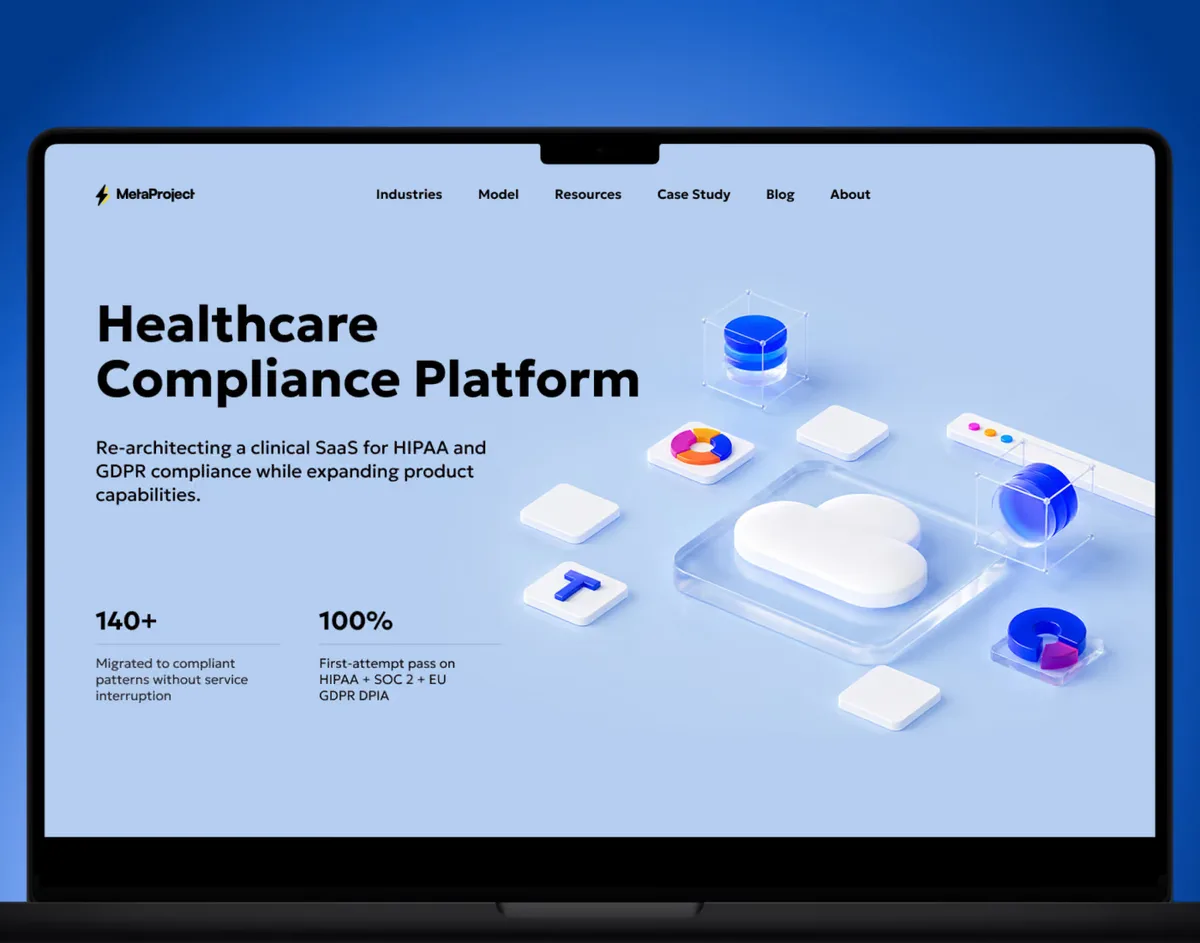
No model is HIPAA-compliant on its own. Compliance is a property of the whole system: who processes protected health information (PHI), under which agreement, and what gets logged. Five things decide it.
- A signed Business Associate Agreement (BAA). Every vendor that stores or processes PHI for you, including the model provider, must sign a BAA. Azure OpenAI Service, Amazon Bedrock and Google Cloud's Vertex AI can be covered by their cloud provider's BAA; check the provider's current list of covered services before PHI reaches them. A consumer chat app without a BAA must never receive PHI.
- The minimum necessary PHI. Send the model only the fields the task needs. Where you can, de-identify first: HIPAA allows the Safe Harbor method, which removes 18 types of identifiers, or Expert Determination by a qualified expert.
- Access control and audit logs. Every prompt, retrieved document and model output that contains PHI is access-controlled and logged, so you can answer who saw what and when.
- Encryption and data residency. PHI is encrypted in transit and at rest and stays in regions and accounts you control. Prompt and output logs count as PHI too.
- No training on your data. Confirm in the contract that the provider does not use your prompts or outputs to train its models, and keep retention to the minimum.
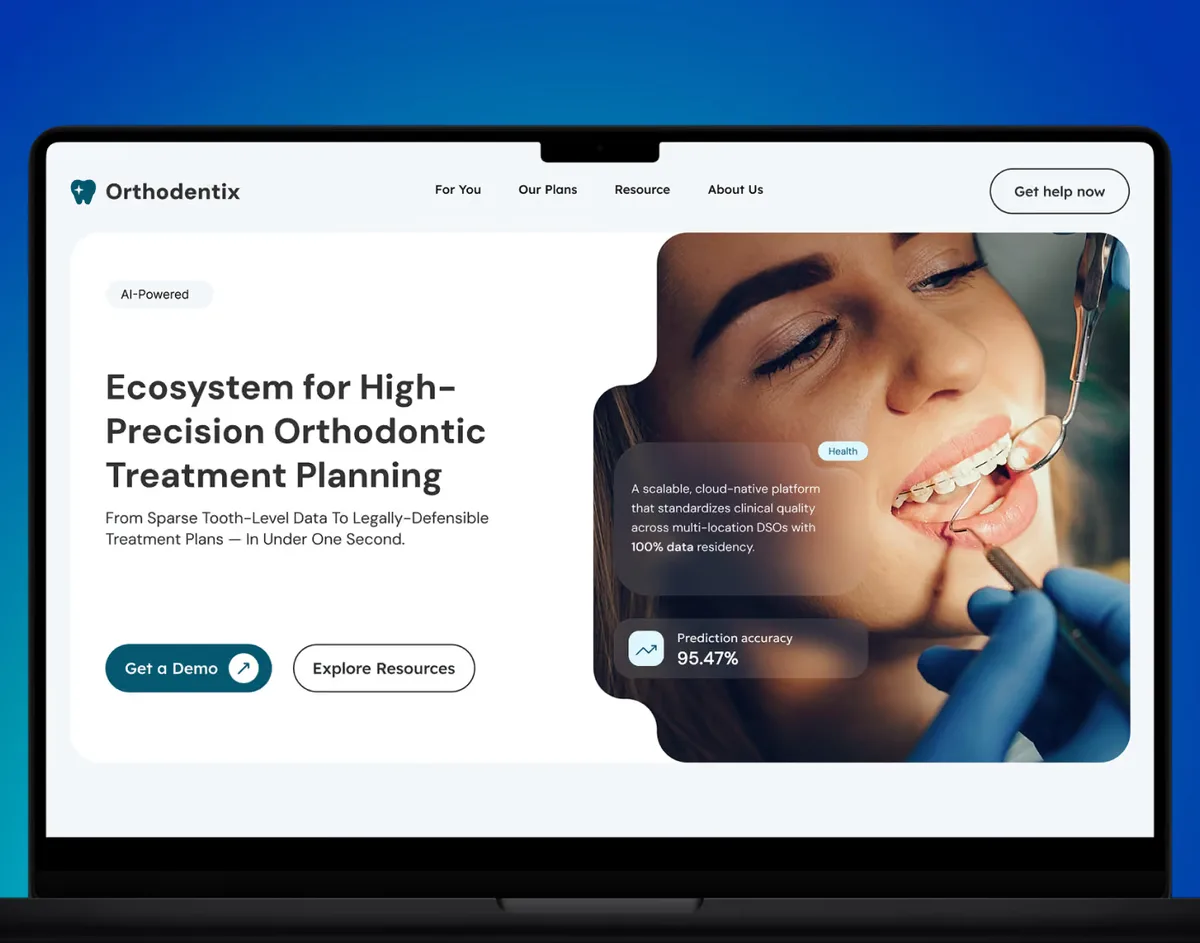
In our orthodontic AI project, clinical data stayed in Azure Health Data Services with HDS-certified data residency, and the model pipeline was designed around that boundary from the first sprint.
Checklist for a HIPAA-compliant LLM application
Before an LLM feature touches patient data, each of these should have an owner and evidence:
- A BAA with every vendor in the PHI path: model provider, vector database, logging and hosting.
- A PHI inventory and a data-flow diagram that shows where PHI enters, is stored and leaves.
- De-identification or minimisation before data reaches the prompt.
- Retrieval that respects each user's permissions, so the model never sees records the user could not open.
- Guardrails that stop PHI from appearing in outputs to people who should not see it.
- An audit log of prompts, retrieved documents and outputs, kept as long as your retention policy requires.
- An evaluation set reviewed by clinicians, rerun on every model or prompt change.
- An incident plan that covers both data breaches and harmful model output.
Generative AI and LLMs in healthcare
The current wave of LLMs and generative AI is most immediately valuable in the administrative and documentation burden that surrounds care: drafting notes, summarising records, handling coding and prior-auth workflows, and answering staff or patient questions from governed sources via RAG. In clinical contexts, the same technology demands the strictest engineering: grounding, evaluation, PHI boundaries, and human oversight. The opportunity is real; the responsibility is higher.
AI in healthcare FAQ
Only through a service covered by a signed Business Associate Agreement, with PHI minimised or de-identified before it reaches the model and every request logged. A consumer chat app without a BAA must never receive patient data.
Across clinical decision support, medical imaging and diagnostics, administrative automation (documentation, coding, prior authorisation), patient-facing triage and scheduling, population health, and research. Administrative automation with LLMs is often the fastest, safest near-term win.
Clinical safety, PHI privacy under HIPAA/GDPR, explainability, rigorous evaluation, and regulatory pathways (e.g. FDA GMLP, EU MDR). These make the engineering and governance around the model harder than the model itself.
It can be, with the right engineering (retrieval grounding, guardrails, PHI-safe pipelines, evaluation, and human oversight) and when applied first to lower-risk administrative tasks. Without that engineering, it isn't.
AI systems designed so PHI is protected throughout (in training data, inference, and logs), with access controls, audit trails, and data handling that meet HIPAA requirements, rather than compliance bolted on after the fact.
Tell us what you are building. On a 30-minute call a senior engineer walks through your clinical AI use case and its compliance needs. Or get a first view of the team and timeline in two minutes.